

Quick answer: The cost of studying in Canada for Indian students in 2026 works out to roughly ₹26 lakh to ₹53 lakh for the first year, depending on where you study. That figure has three parts: tuition (CAD 15,000–55,000), the mandatory living-cost proof of CAD 22,895 (about ₹15.7 lakh) that IRCC demands before it issues a study permit, and roughly CAD 400–600 in visa and biometrics fees. Newfoundland and Labrador is the cheapest province. Ontario is the most expensive, by a wide margin.
All CAD-to-INR conversions in this article use 1 CAD = ₹68.5, the rate on 28 July 2026. Currency moves — recheck before you transfer money.
Table of Contents
- Cost of studying in Canada for Indian students — the honest total
- Tuition fees in Canada: official 2025/26 numbers
- The CAD 22,895 proof-of-funds rule
- Is the GIC still mandatory in 2026?
- City-by-city living costs
- Seven hidden costs nobody budgets for
- Canada vs UK vs Germany vs Malta
- How much can part-time work really cover?
- Is it worth it? The payback maths
- Costly mistakes I see every admission season
- Real student scenarios
- FAQs
Cost of Studying in Canada for Indian Students: The Honest Total
Most cost articles give you a single number. That number is almost always wrong, because a diploma at a public college in Winnipeg and a master’s at the University of Toronto are not the same purchase.
Here is the realistic first-year outflow, broken into three paths Indian students actually take:
| Study path | Tuition (CAD/yr) | Living funds IRCC requires | Total year one (CAD) | Total year one (INR) |
|---|---|---|---|---|
| Budget — public college diploma or a university in NL, NB, Manitoba, Saskatchewan | 15,000–20,000 | 22,895 | 38,400–43,400 | ₹26.3–29.7 lakh |
| Mid-tier — most public universities in Alberta, BC interior, Nova Scotia | 24,000–32,000 | 22,895 | 47,400–55,400 | ₹32.5–38.0 lakh |
| Premium — U15 research universities, Ontario, Toronto/Vancouver | 42,000–55,000 | 22,895 | 65,400–78,400 | ₹44.8–53.7 lakh |
Totals include the CAD 150 study permit fee, CAD 85 biometrics, and roughly CAD 300 in application and courier costs. They exclude flights and any dependants.
Read that table twice. The single biggest driver of the cost of studying in Canada for Indian students is not the exchange rate or the intake — it is province and institution choice. The gap between the cheapest and most expensive path is nearly ₹27 lakh a year — more than the entire cost of a degree in several other countries. Where you study in Canada matters more than whether you study in Canada.
How Much Is Tuition in Canada for Indian Students?
Forget the ranges consultants quote. Statistics Canada publishes actual averages every year, and the 2025/26 figures are the most reliable benchmark available.
According to the Statistics Canada tuition release for 2025/26:
- International undergraduate average: CAD 41,746/year (₹28.6 lakh) — up 2.5% year on year
- International graduate average: CAD 24,028/year (₹16.5 lakh) — up 1.5%
Note the pattern most families miss: a master’s in Canada is usually cheaper than a bachelor’s. International undergraduates now pay more than five times what Canadian students pay. Graduate students pay about three times. If you are choosing between a bachelor’s abroad and a bachelor’s in India followed by a master’s in Canada, the second route is dramatically cheaper.
Province-by-province tuition (2025/26 international averages)
| Province | Undergraduate (CAD) | Undergraduate (INR) | Graduate (CAD) | Graduate (INR) |
|---|---|---|---|---|
| Newfoundland & Labrador | 18,867 | ₹12.9 lakh | 6,964 | ₹4.8 lakh |
| National average | 41,746 | ₹28.6 lakh | 24,028 | ₹16.5 lakh |
| Ontario | 49,802 | ₹34.1 lakh | 28,624 | ₹19.6 lakh |
A graduate degree in Newfoundland costs about one-quarter of the same level of study in Ontario. Memorial University in St. John’s is a legitimate, publicly funded institution — not a compromise. Yet the overwhelming majority of Indian applications I review each year are for Toronto, Brampton, Mississauga and Surrey, where both tuition and rent are at their national peak.
Two caveats before you build a spreadsheet on these numbers. First, these are averages across all fields — engineering, computer science and business run above them, arts and humanities below. Second, tuition typically rises 3–8% each year, so a two-year master’s costs more than double year one. Budget accordingly.
The CAD 22,895 Rule: How Much Money You Must Prove
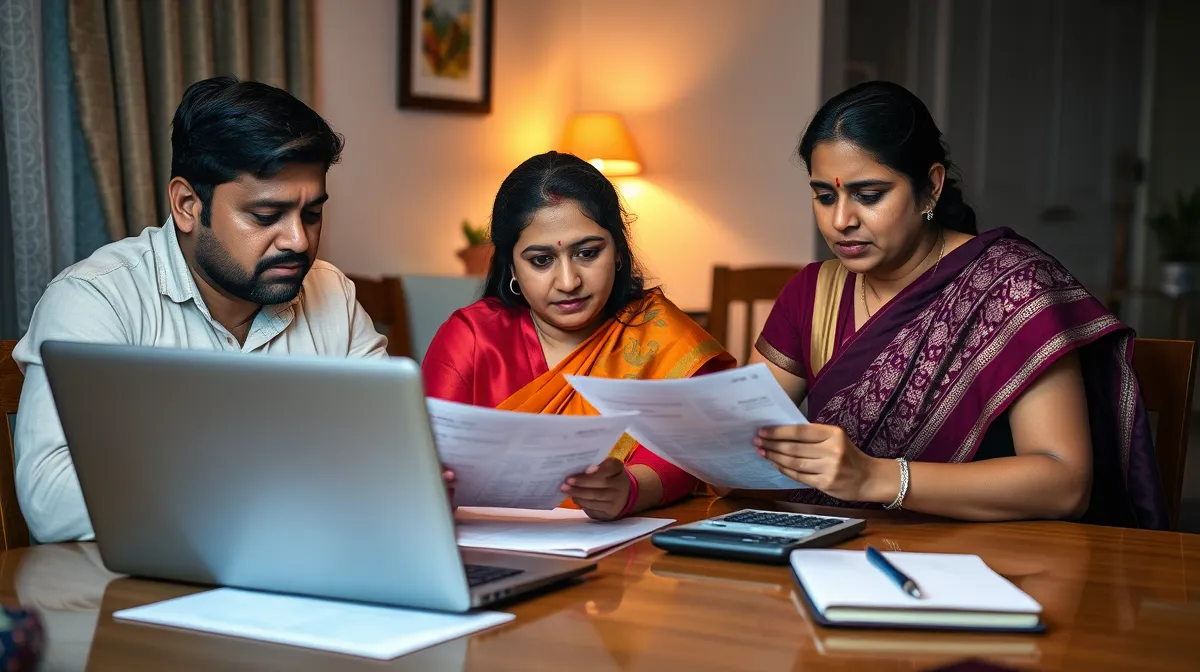
This is where most family budgets break, and it is the single most misreported number in Indian study-abroad content.
IRCC requires you to prove you can support yourself for one year without working. That amount is separate from tuition and separate from your airfare. It rose on 1 September 2025 and is indexed annually to Statistics Canada’s Low-Income Cut-Off.
From the official IRCC proof of financial support page, for all provinces except Quebec:
| Family members (including you) | Funds required per year (CAD) | Approx. INR |
|---|---|---|
| 1 (just you) | 22,895 | ₹15.68 lakh |
| 2 | 28,502 | ₹19.52 lakh |
| 3 | 35,040 | ₹24.00 lakh |
| 4 | 42,543 | ₹29.14 lakh |
| Each additional member beyond 7 | +6,170 | +₹4.23 lakh |
Quebec sets its own threshold through the Ministère de l’Immigration, de la Francisation et de l’Intégration, and it is higher — check the provincial figure directly if you are applying to a Quebec institution.
The trap: families budget tuition plus “some living costs” and arrive at, say, ₹22 lakh — then discover the visa file needs tuition plus ₹15.7 lakh sitting in provable form. Every year I meet students who have an admission letter, a paid tuition deposit, and no viable path to the funds proof. At that point the deposit is often non-refundable. If you want to understand how visa officers assess these files, our breakdown of Canada study visa rules for Indian students covers the approval logic in detail.
Is the GIC Still Mandatory in 2026?
No — and almost every article you will read gets this wrong.
The Guaranteed Investment Certificate became famous because it was compulsory under the Student Direct Stream. IRCC closed SDS on 8 November 2024. Every Indian applicant now files under the regular study permit stream, and the regular stream does not mandate a GIC.
IRCC’s own list of acceptable proof of funds includes a GIC as one option among several — alongside four months of bank statements, an education loan sanction letter from a bank, proof of paid tuition and housing, and a Canadian bank account in your name.
So why do most students still buy one? Because it is clean. A GIC is a single document showing a fixed, verified, liquid amount held by a Canadian financial institution. Four months of Indian bank statements with three large unexplained credits invite questions. A GIC does not.
| GIC route | Bank statements / loan route | |
|---|---|---|
| Pros | Single clean document; funds already in Canada; no source-of-funds argument; money released to you monthly on arrival | No large upfront transfer; no forex cost until later; loan sanction letters are widely accepted; keeps capital in India earning interest |
| Cons | ₹15.7 lakh must move before the visa decision; setup takes 2–10 working days; small admin fee; refund process takes time if refused | Officer scrutinises every large credit; needs a clean 4-month trail; weak documentation is a top rejection cause |
My practical guidance: if your funds have a clean, documented history — salary, a matured FD, an education loan sanction — the statement route works and saves you the forex spread. If the money arrived recently from relatives or a property sale, the GIC is worth the cost because it removes the argument entirely. Weak or unexplained financials remain one of the leading Canada student visa rejection reasons.
If you do choose a GIC, Scotiabank, CIBC, ICICI Bank Canada and SBI Canada all run student programmes. Compare release schedules — some pay a lump sum on arrival plus monthly instalments; others spread everything over twelve months, which matters enormously if you need first-and-last-month rent in week one.
Cost of Living in Canada for Indian Students, City by City
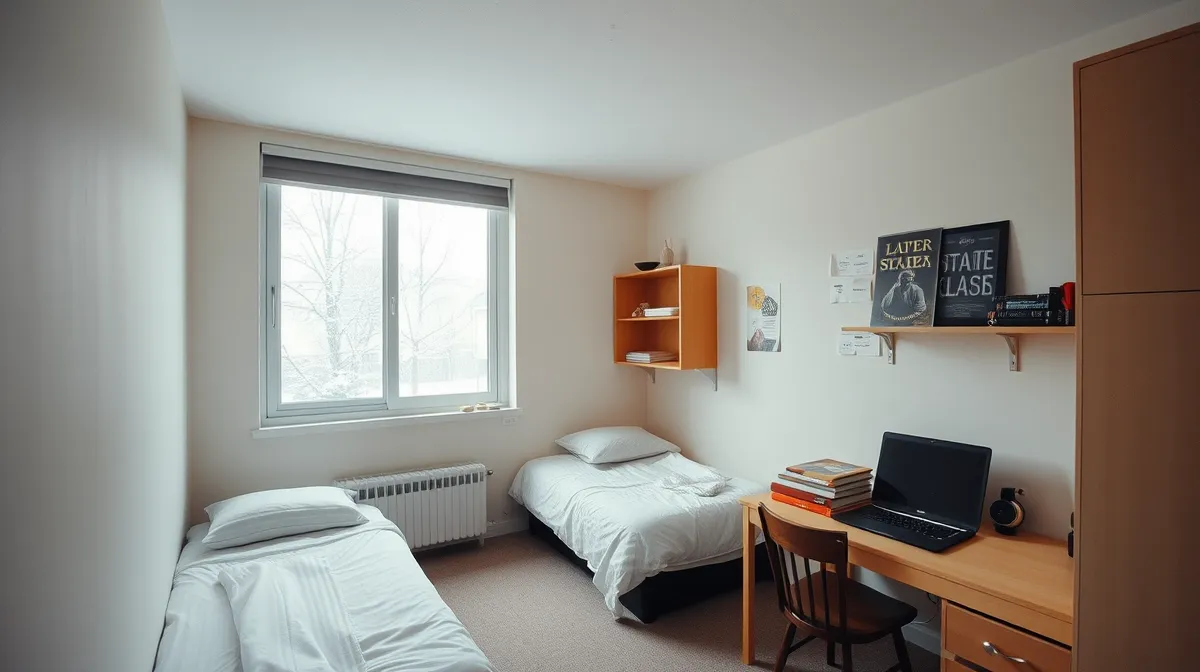
IRCC’s CAD 22,895 is a floor for visa purposes, not a realistic budget for Toronto. Here is what students actually spend, monthly:
| City | Shared room / rent | Groceries | Transit | Phone + internet | Monthly total (CAD) | Monthly total (INR) |
|---|---|---|---|---|---|---|
| Toronto | 900–1,300 | 350–450 | 156 | 75 | 1,600–2,100 | ₹1.10–1.44 lakh |
| Vancouver | 950–1,400 | 350–450 | 105 | 75 | 1,600–2,150 | ₹1.10–1.47 lakh |
| Ottawa | 750–1,000 | 320–420 | 135 | 70 | 1,350–1,750 | ₹0.92–1.20 lakh |
| Calgary | 700–950 | 300–400 | 112 | 70 | 1,250–1,650 | ₹0.86–1.13 lakh |
| Halifax | 700–950 | 320–420 | 82 | 70 | 1,250–1,600 | ₹0.86–1.10 lakh |
| Winnipeg | 550–800 | 280–380 | 105 | 70 | 1,100–1,450 | ₹0.75–0.99 lakh |
| St. John’s, NL | 550–800 | 300–400 | 78 | 70 | 1,050–1,400 | ₹0.72–0.96 lakh |
These are typical market ranges as of mid-2026 and will vary with your neighbourhood and lifestyle. Two structural points:
- Toronto and Vancouver cost roughly ₹4–6 lakh more per year than Winnipeg or St. John’s for an identical standard of living. Over a two-year master’s that is ₹8–12 lakh — real money.
- Rent in Toronto alone can exceed the entire IRCC threshold. At CAD 1,200 a month you have spent CAD 14,400 of your 22,895 on housing before eating anything.
Seven Hidden Costs Nobody Puts in the Brochure
1. TCS on your money transfer
This is an Indian tax almost no study-abroad article mentions. Under the Liberalised Remittance Scheme, education remittances above ₹10 lakh in a financial year attract Tax Collected at Source. Since 1 April 2026 the rate for self-funded education is 2% (reduced from 5%). Remittances funded by a sanctioned education loan from a specified financial institution attract 0%.
On a ₹30 lakh self-funded transfer, that is roughly ₹40,000 collected upfront. TCS is adjustable against your family’s income tax liability and refundable when they file returns — but it is cash out of the door at exactly the moment cash is tightest. Routing even part of the funding through an education loan eliminates it entirely.
2. Forex spread
Banks typically charge 1.5–3% over the interbank rate. On ₹30 lakh that is ₹45,000–90,000. Comparing three providers takes an hour and often saves more than a month’s rent.
3. The first-30-days spend
Winter jacket, boots, bedding, kitchen basics, SIM, transit pass, first-and-last-month rent deposit. Budget CAD 2,500–3,500 (₹1.7–2.4 lakh) in the first month alone. Students who arrive in September with exactly their monthly allowance struggle badly.
4. Health insurance
Provincial coverage varies. Ontario does not cover international students at all — you buy the university plan, typically CAD 700–900/year. BC, Alberta and Saskatchewan enrol students in provincial plans after a waiting period.
5. The PGWP fee
Your study permit fee is CAD 150. The post-graduation work permit is a separate application: CAD 155 processing plus a CAD 100 open work permit holder fee, CAD 255 total (₹17,500), and both must be paid together or the application is returned. Before you commit to a cheap college programme, check the field-of-study and language rules in our guide to PGWP Canada 2026 rules — some diplomas no longer qualify at all.
6. The PAL and the 2026 cap
Most college and undergraduate applicants need a Provincial or Territorial Attestation Letter, issued through your institution, typically 2–6 weeks after they request it. IRCC set 309,670 study permit spaces for 2026, allocated province by province. Under a February 2026 IRCC update, master’s and doctoral students at public DLIs are now exempt from the PAL requirement — a meaningful advantage for postgraduate applicants.
7. Tuition escalation
A 5% annual rise on CAD 30,000 tuition adds CAD 1,500 (₹1 lakh) in year two. Multi-year programmes should be budgeted with escalation built in, not as year-one cost × number of years.
Canada vs UK vs Germany vs Malta: Where Does Your Money Go Furthest?
| Canada | UK | Germany | Malta | |
|---|---|---|---|---|
| Typical master’s tuition/yr | ₹16–20 lakh | ₹18–28 lakh | ₹0–3 lakh (public) | ₹8–12 lakh |
| Funds proof required | ₹15.7 lakh | ~₹13.7 lakh (London 9 mo) | ~₹12.6 lakh blocked account | ~₹8 lakh |
| Programme length (master’s) | 1–2 years | 1 year | 2 years | 1–2 years |
| Post-study work | Up to 3 years (PGWP) | 18 months (2 yrs for some) | 18 months | Varies |
| Work during study | 24 hrs/week | 20 hrs/week | 140 full days/yr | 20 hrs/week |
| PR pathway | Strong (Express Entry) | Harder, costly | Moderate, German required | EU route, slower |
Germany wins on pure tuition cost. Canada wins on post-study work length and PR clarity. The UK is fastest but the most expensive per year — the full breakdown is in our cost of studying in the UK for Indian students guide, and Malta’s lower-cost EU route is covered in our cost of studying in Malta analysis. Being honest about it: if your only constraint is money, Canada is not your cheapest option. If your goal is a three-year work permit and a realistic PR route, it is among the strongest.
How Much Can Part-Time Work Realistically Cover?
Since November 2024, study permit holders may work 24 hours per week off campus during academic terms, and unlimited hours during scheduled breaks. On-campus work is uncapped.
The maths, at a realistic CAD 17/hour:
- 24 hrs × CAD 17 × 4.3 weeks = CAD 1,754/month gross
- After tax, CPP and EI: roughly CAD 1,400–1,500 net (₹96,000–1.03 lakh)
That covers living costs in Winnipeg or Halifax. In Toronto it covers rent and groceries with little left. It does not cover tuition anywhere in Canada.
Anyone telling you that you will “earn your fees back” is either misinformed or selling something. Twenty-four hours is a hard weekly ceiling, not an average — IRCC treats a single 30-hour week as a breach of your permit conditions. Our guide to part-time jobs in Canada for Indian students covers what the rule actually permits and where students get caught.
Is It Worth It? The Payback Maths
A two-year master’s at a mid-tier Canadian university costs roughly ₹55–70 lakh all-in. Graduate starting salaries vary sharply by field: engineering, computer science and data roles commonly start at CAD 65,000–85,000, while business, arts and many college-diploma pathways start closer to CAD 45,000–55,000.
At CAD 70,000 gross, after Canadian tax and living costs, a disciplined graduate saves perhaps CAD 18,000–25,000 a year. Payback on the investment is roughly four to six years — assuming you find relevant work quickly, which is not guaranteed in the current market.
Two honest observations after fifteen years of this. First, the students who see strong returns almost always chose a programme with a real labour-market link, not the cheapest available seat. Second, a college diploma in an unrelated field, taken purely as a visa route, is now the single riskiest use of ₹30 lakh in Canadian education — tightened PGWP field-of-study rules have removed the safety net that used to exist.
Costly Mistakes I See Every Admission Season
- Budgeting tuition and forgetting the funds proof. The ₹15.7 lakh is not optional and not spendable on tuition. It is a separate requirement.
- Assuming the GIC is mandatory. SDS closed in November 2024. If your financials are clean, you may not need to move ₹15.7 lakh before a decision.
- Applying only to Toronto and Vancouver. The same qualification from Manitoba or Newfoundland can cost ₹15–25 lakh less over two years.
- Ignoring TCS. A 2% collection on a large self-funded transfer is real cash. An education loan removes it.
- Choosing a college programme without checking PGWP eligibility. Field-of-study restrictions now disqualify many diplomas.
- Depositing recent large sums into the account you will show. Unexplained credits in the four-month window trigger scrutiny.
- Doing a bachelor’s abroad when a master’s abroad costs less. International undergraduates pay over five times domestic rates; graduate students pay about three times.
Real Student Scenarios
The following are illustrative composite scenarios drawn from common situations Indian students face. They are not verified individual testimonials.
Rohan, 22 — Pune → Memorial University, Newfoundland
Rohan had 71% in his B.Tech and a family budget of ₹35 lakh total. Every consultant he met pushed Toronto colleges at ₹28 lakh tuition alone. He nearly signed. Instead he applied to Memorial University’s master’s programme, where international graduate tuition sits near the bottom of the national table. His full two-year cost — tuition, living, flights, insurance — came to roughly ₹34 lakh, against ₹58 lakh for the Ontario option he had been shown. He is now in his second year with no education loan.
Sneha, 24 — Hyderabad → University of Calgary
Sneha’s file was refused the first time. Her father had sold agricultural land and transferred ₹18 lakh into her account six weeks before filing. The officer flagged unexplained funds. On the second attempt she used a GIC plus a sanctioned education loan, with the land sale documented through the sale deed and tax records. Approved in five weeks. The lesson was not the amount — it was the paper trail.
Arjun, 20 — Ludhiana → a Toronto college diploma
Arjun’s family committed ₹32 lakh to a two-year business diploma near Toronto because relatives lived there. Rent alone consumed CAD 1,250 a month. He worked the full 24 hours weekly and still needed ₹4 lakh extra from home in year one. He graduated employable but with the family ₹9 lakh deeper than planned. His mistake was geographic, not academic — the same diploma in Saskatchewan would have cost roughly ₹8 lakh less.
Priya, 26 — Chennai → University of Manitoba
Priya funded a ₹28 lakh master’s entirely through an education loan. Because the remittance was routed through a sanctioned loan from a specified financial institution, her TCS liability was nil — saving roughly ₹36,000 upfront versus the self-funded route her family had originally planned. She now works in Winnipeg on a PGWP and has begun the Provincial Nominee process.
Frequently Asked Questions
What is the total cost of studying in Canada for Indian students in 2026?
Between ₹26 lakh and ₹53 lakh for the first year, depending on institution and city. This covers tuition (₹10–38 lakh), the mandatory living-funds proof of ₹15.7 lakh, and roughly ₹40,000 in visa, biometrics and application fees.
How much bank balance is required for a Canada student visa in 2026?
CAD 22,895 (about ₹15.68 lakh) for a single applicant, for all provinces except Quebec, for applications filed on or after 1 September 2025. This is on top of first-year tuition and travel costs. It rises each September in line with Statistics Canada’s Low-Income Cut-Off.
Is Canada cheaper than the UK for Indian students?
Per year, usually yes — Canadian master’s tuition averages ₹16–20 lakh versus ₹18–28 lakh in the UK. But UK master’s programmes run one year against one to two in Canada, so a UK degree can cost less in total. Canada wins on post-study work length and PR pathways.
Is the GIC still mandatory for a Canada study permit?
No. The GIC was a Student Direct Stream requirement, and IRCC closed SDS on 8 November 2024. Under the regular stream a GIC is one of several accepted proofs of funds, alongside bank statements, education loan sanction letters and proof of prepaid tuition and housing.
Which is the cheapest province in Canada for Indian students?
Newfoundland and Labrador, on official 2025/26 figures — international undergraduate tuition averages CAD 18,867 and graduate CAD 6,964, against Ontario’s CAD 49,802 and CAD 28,624. Manitoba, Saskatchewan and New Brunswick are also well below the national average on both tuition and rent.
Can I cover my tuition by working part-time in Canada?
No. At 24 hours a week and roughly CAD 17 an hour you net about CAD 1,400–1,500 a month, which covers living costs in a mid-cost city and rent alone in Toronto. Part-time work is a living-expense supplement, not a tuition strategy.
Do I have to pay tax when sending money to Canada for education?
Yes, if the amount exceeds ₹10 lakh in a financial year. Since 1 April 2026, self-funded education remittances above that threshold attract 2% TCS. Remittances funded by a sanctioned education loan from a specified financial institution attract 0%. TCS is adjustable against your income tax liability and refundable on filing.
How much is the Canada study permit fee in 2026?
CAD 150 (about ₹10,275) for the study permit application, plus CAD 85 (about ₹5,823) for biometrics. Later, the post-graduation work permit costs a further CAD 255 — CAD 155 processing plus a CAD 100 open work permit holder fee.
Do I need a Provincial Attestation Letter in 2026?
Most college and undergraduate applicants do. Since a February 2026 IRCC update, master’s and doctoral students at public designated learning institutions are exempt. Your institution requests the PAL on your behalf; allow 2–6 weeks.
Where to Go From Here
The difference between a ₹26 lakh Canadian education and a ₹53 lakh one is almost entirely a series of choices made before you apply — province, institution type, funding route, and whether your financial documents are built to survive an officer’s scrutiny.
If you are working through those decisions now, our counselling team reviews your marks, budget and target intake and maps the specific institutions where your money goes furthest. There is no obligation and no pressure — most of these conversations end with a shortlist and a realistic number, which is usually what families are missing.
Book a free counselling session with RiseUpEdu to get a personalised breakdown of the cost of studying in Canada for Indian students, built around your marks, budget and target intake.
You can also follow us for weekly updates on visa rule changes and intake deadlines: Instagram · Facebook · Threads · Snapchat
About the Author – M Fazeel
M Fazeel is a highly experienced admission counsellor with over 15 years of expertise in guiding students across India and abroad. Recognised among the top education counsellors in India, he has successfully mentored thousands of students who are now pursuing or have completed their education in leading institutions in India and overseas.
He is a well-educated researcher and author, known for providing practical, result-oriented guidance in career and admission planning. M Fazeel also holds professional certifications from the Indian Institute of Technology Delhi, further strengthening his credibility and expertise in the education domain.
LinkedIn: https://www.linkedin.com/in/mohammed-fazeel-9a543722/
Twitter: https://x.com/fazeelkhan7
Official sources referenced: IRCC — Proof of financial support, Statistics Canada — Tuition in Canada 2025/2026, IRCC — Provincial and territorial attestation letters. Figures verified 28 July 2026. Immigration rules change; always confirm current requirements on canada.ca before applying.