

Student accommodation in UK for Indian students typically costs between £550 and £1,300 a month depending on the city and room type — but the number that actually derails families isn’t the rent, it’s the guarantor. Most private landlords and letting agents in the UK will not sign a tenancy without a UK-based guarantor, and your parents in Mumbai or Ludhiana don’t qualify, no matter how much they earn. Students who don’t know this find out days before their flight, when the flat they thought was booked suddenly needs a name their family can’t provide.
That single rule quietly derails more move-ins than the housing shortage headlines you’ve probably read. You’ve likely seen the stories about UK student housing running short — and some of that is true, in some cities, for some room types. But the accommodation problem Indian students actually run into on the ground is rarely “there’s nothing available.” It’s “there’s something available, and I can’t meet the paperwork requirement to get it.”
This guide walks through what accommodation genuinely costs city by city in 2026, how halls, private lets, and shared houses compare, the guarantor problem and how students around you are solving it, when to book so you’re not scrambling in August, and how to avoid the scams that specifically target students booking from abroad — based on patterns we see every intake at RiseUpEdu, cross-checked against UK government and UKCISA guidance.
Quick Navigation
- Student Accommodation in UK for Indian Students: What Does It Cost in 2026?
- Halls, Private Rentals, or a Shared House: Which One Should You Pick?
- Why the “No UK Guarantor” Rule Catches So Many Indian Students
- When Should You Actually Book?
- Is the UK Housing Shortage Even Still True in 2026?
- How Do You Avoid Accommodation Scams From India?
- Deposits, Bills, and Council Tax: What You’re Actually Signing
- The Mistakes We See Every Intake
- Expert Tips From a Counsellor’s Desk
- Real Student Success Stories
- Frequently Asked Questions
Student Accommodation in UK for Indian Students: What Does It Cost in 2026?
There’s no single answer here, because the city you pick moves your rent by nearly £750 a month — more than most families budget for the entire “miscellaneous” line in their financial planning.
University halls generally run £100 to £200 a week, and most of that includes wi-fi, water, heating, and contents insurance, so the sticker price is closer to the real cost than a private rental’s headline rent. Private lets and purpose-built student accommodation (PBSA) run from roughly £70 a week in cheaper cities to well over £300 a week in central London, usually with bills billed separately unless the listing says otherwise.
| City | Typical Monthly Rent (2026) | What You Get |
|---|---|---|
| London | £800 – £1,300 | PBSA studios average around £1,133/month (£13,600/year); shared flats bring this down |
| Manchester | £450 – £700 (private); £1,000 – £1,700 (modern PBSA) | Large student population, strong transport links, more supply than London |
| Birmingham | £450 – £700 (private); £1,000 – £1,700 (modern PBSA) | Comparable to Manchester, growing international student intake |
| Glasgow | £450 – £700 | Lower cost of living overall, popular for Scottish university intakes |
| Coventry, Leeds, Sheffield | £400 – £650 | Smaller cities, easier to find shared housing, shorter commutes |
National surveys put the average UK student’s rent at roughly £563 to £575 a month outside London — useful as a sanity check when an agent quotes you something wildly different for a “premium” room. If a listing is priced 30–40% below everything else on this table for the same city and room type, that’s not a bargain. Keep that number in your head — you’ll need it again in the scams section below.
Halls, Private Rentals, or a Shared House: Which One Should You Pick?
Every Indian student asks this in roughly the same order: “Is it safer to be in halls?” Yes, generally, especially in your first year. But safer isn’t always cheaper, and cheaper isn’t always worse. Here’s how the three real options stack up against each other.
| Option | Pros | Cons |
|---|---|---|
| University Halls | Guarantor almost never required; bills usually included; on or near campus; university handles disputes | Limited to first years at most universities; less privacy; fewer cooking/dietary options for Indian food |
| Private Halls / PBSA | Gyms, study lounges, security staff; company-run so scams are rare; flexible contract lengths | Priciest option per square foot; still often needs a guarantor or extra deposit for internationals |
| Shared House (HMO) | Cheapest per month; more independence; can choose Indian or South Asian flatmates | Guarantor almost always required; you’re jointly liable for the whole property’s rent if a flatmate defaults; landlord quality varies enormously |
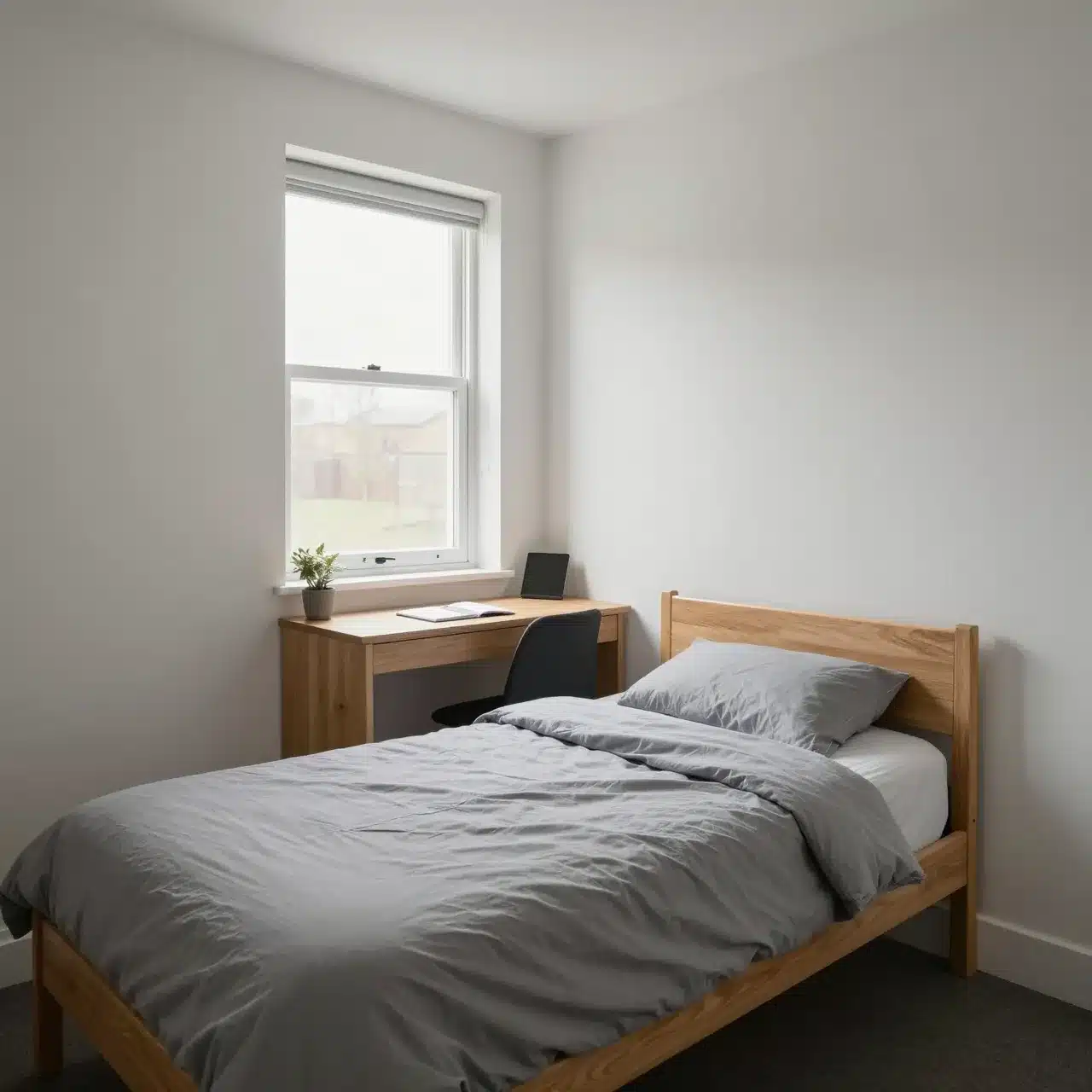
Our general advice: book university-managed halls for year one even if a private option looks £50 cheaper. The guarantor exemption alone is worth it, and it buys you a year to build a UK bank statement, a local reference, and a feel for which private landlords in your university’s area are actually reliable before you sign anything yourself.
Why the “No UK Guarantor” Rule Catches So Many Indian Students
Here’s the part nobody puts in the university’s glossy accommodation brochure: outside of university-run halls, most private landlords and letting agents in the UK will ask for a guarantor who is a UK resident, over 21, financially stable, and able to pass a credit check — typically someone earning 18 to 20 times the monthly rent. Your father’s salary in India, however strong, doesn’t show up on a UK credit check, and most landlords won’t accept an overseas guarantor at all.
This isn’t a technicality. It’s standard practice because landlords have no way to chase an overseas guarantor for unpaid rent through UK courts, so they simply don’t take the risk. Students discover this the way everyone discovers rules that live in the fine print: too late, usually while the flat they liked is being offered to someone else.
You have three real ways around it:
- University halls — most don’t ask for a guarantor at all, which is the single biggest reason we recommend them for year one.
- A guarantor service — companies like Housing Hand or Rent Guarantor stand in as your UK guarantor for a one-time fee (usually a percentage of the annual rent). This is the most common fix for students going straight into private accommodation.
- Paying several months’ rent upfront — many landlords will waive the guarantor requirement if you pay 3–6 months in advance instead. This needs cash flow planning with your family before you commit, since it lands on top of your first-semester tuition and your CAS-linked visa finance requirements.

Whichever route you choose, sort it out before you accept an accommodation offer, not after. A verbal “yes, we’ll take a guarantor service” from a letting agent means nothing until it’s confirmed in writing.
When Should You Actually Book?
Timing accommodation against your visa and CAS timeline is where most of the panic in this process comes from, so here’s the sequence we walk students through.
| Timeline | What To Do |
|---|---|
| 6–9 months before intake | Shortlist universities and check whether your course guarantees first-year halls (most Russell Group universities do) |
| After your unconditional offer | Apply for university halls immediately — the best rooms and lowest rates go first, often before your CAS is even issued |
| After your CAS letter is issued | If going private, start serious viewings and confirm your guarantor route now, since your visa finance evidence and rent commitment need to line up |
| 4–8 weeks before arrival | Sign contracts, pay deposits only through protected schemes, and get move-in dates in writing |
| 2 weeks before flying | Confirm key collection details, emergency contacts, and first-week essentials (SIM, bank account, local transport card) |
Notice that halls applications open before your CAS is confirmed. That surprises a lot of families who assume accommodation only makes sense after the visa is sorted. In reality, if you wait for your student visa to be approved before you even look at housing, you’re often looking at what’s left over — which tends to be the most expensive, least convenient rooms in the private market.
Is the UK Housing Shortage Even Still True in 2026?
You’ve probably read that the UK doesn’t have enough student beds. That was true, and in some cities it still is — but 2026 looks more complicated than the headlines suggest, and getting this wrong can cost you money.
Housing analysts and university accommodation experts describe 2026 as a genuinely two-speed market. Cities like Bristol and Edinburgh have purpose-built student accommodation running above 98% occupancy, meaning rooms there are scarce and expensive months in advance. At the same time, other providers and cities are reporting the opposite problem — a growing number of empty rooms and softening demand, as new PBSA developments completed faster than international enrolment grew in certain regions.
What this means practically: don’t treat “the UK has a housing crisis” as a blanket fact that applies to your specific university. Check the actual booking status for your city and course intake, because a friend’s horror story from Bristol tells you nothing reliable about availability in Coventry or Sheffield. If your university is in a high-occupancy city, book the day your offer becomes unconditional. If it’s not, you have more room to negotiate on price and location than the general narrative suggests.
How Do You Avoid Accommodation Scams From India?
This is the section every parent should read before wiring a deposit. Booking a flat from another country, without the ability to view it in person, is exactly the setup rental fraudsters look for — and international students are targeted more than any other renter group because verification is harder from abroad.
Reported student accommodation scams in the UK rose sharply through 2025, and UK police fraud data has consistently shown fraudulent landlords collectively costing renters hundreds of millions of pounds a year, with individual victims typically losing well over £1,000 each. The pattern is almost always the same: a listing with real photos stolen from a genuine property, a “landlord” who is conveniently abroad and unavailable for a video call at a normal hour, and pressure to pay a deposit before you’ve verified anything.
Red flags worth memorizing:
- Rent priced well below the market rate for that city and room type (see the cost table above — anything 30%+ cheaper deserves scrutiny)
- A deposit demanded before any viewing, in person or via a live, unscripted video call
- A landlord who is “currently abroad” and only communicates by message or email
- Payment requested by bank transfer to a personal account rather than a company account or protected scheme
- No mention of a deposit protection scheme anywhere in the paperwork
Book only through your university’s official accommodation office, a recognised PBSA provider, or a letting agent registered with a trade body like ARLA or UKALA. If something feels off, ask your university’s international student office to verify the listing before you send a single rupee — most will do this for free, and it takes them minutes. UKCISA’s independent accommodation advice is also worth reading alongside whatever your agent tells you, since it isn’t trying to sell you anything. If you do get scammed, report it immediately through Report Fraud, the UK’s national fraud and cyber crime reporting service (it replaced the older Action Fraud service in December 2025).
Deposits, Bills, and Council Tax: What You’re Actually Signing
Once you’re past the guarantor and scam hurdles, the paperwork itself has a few rules worth knowing before you sign.
Deposit protection is a legal requirement, not a courtesy. Under UK government rules on tenancy deposit protection, any landlord renting on an assured shorthold tenancy must place your deposit in a government-approved scheme — Deposit Protection Service, MyDeposits, or the Tenancy Deposit Scheme — within 30 days of receiving it, and this applies even if your parents are the ones transferring the money on your behalf. If a landlord asks you to pay a deposit in cash with no scheme mentioned, that alone is grounds to walk away.
Bills depend entirely on your accommodation type. University halls almost always bundle wi-fi, water, and heating into the weekly rent. Private rentals frequently don’t, so always ask whether the quoted rent is “bills included” or “bills excluded” before comparing prices across two listings — a £600/month “bills excluded” flat can easily cost more overall than a £680/month “bills included” one.
Full-time students are exempt from Council Tax in the UK, but you’re not automatically excused — you need a council tax exemption certificate from your university’s registry and must submit it to the local council yourself, or you’ll start receiving bills you shouldn’t be paying.
Your Immigration Health Surcharge (IHS) is separate from your rent, but families often confuse the two when budgeting. As of the current Home Office fee schedule, students pay £776 per year of their visa (not per year of study, so a 2-year visa costs £1,552, paid upfront during your visa application). This gives you NHS access but has nothing to do with your accommodation contract — don’t let a landlord or agent bundle it into your rent quote as if it does.
The Mistakes We See Every Intake
A few patterns repeat almost every single year, regardless of which city or university the student is heading to:
- Booking based only on photos. Always ask for a live video walkthrough, not just a photo gallery, especially for anything advertised as “recently renovated.”
- Ignoring the guarantor question until the last month. By the time most students think about it, the guarantor service they’d have used is backlogged with other last-minute applicants from the same intake.
- Choosing based on rent alone, ignoring commute time. A room that’s £100/month cheaper but 50 minutes from campus by bus often costs more in time, transport passes, and missed early lectures than it saves.
- Signing a 51-week contract without checking the summer plan. Many private lets run for a full year even though term time is roughly 39 weeks — know what you’re paying for the empty months if you’re going home.
- Assuming halls are always cheaper. In some cities, a shared HMO room with friends works out cheaper than catered halls. Compare the actual total, not the reputation.
Expert Tips From a Counsellor’s Desk
After walking hundreds of Indian families through this process, a few pieces of advice consistently save people money and stress:
- Apply for halls the moment your offer turns unconditional — don’t wait for your CAS or visa. Halls allocation runs on a first-come basis independent of your visa timeline.
- Ask your university’s international office directly whether guarantor services are pre-approved for their private partner accommodation. Many universities negotiate discounted rates with guarantor companies that aren’t advertised publicly.
- Budget your first month separately from the rest of the year. Between the deposit (often 4–6 weeks’ rent), the first month’s rent, and any agency fees, your upfront cash need can be double a normal month’s rent.
- Join your university’s incoming-students WhatsApp or Facebook group before you fly. Genuine flatmate-search and sublet posts from verified students are usually safer and cheaper than open-market listings.
- If you’re bringing a dependant on a dependant visa, factor in that most halls only accommodate single students — you’ll need private family accommodation from day one, which changes your guarantor and budget planning considerably.
Real Student Success Stories
The following are illustrative, composite scenarios reflecting situations we commonly see during counselling — not verified individual case studies.
Ananya, Pune — Manchester Metropolitan University. Ananya had an unconditional offer in hand but no CAS yet when she started house-hunting, and every private landlord she messaged wanted a UK guarantor she didn’t have. She switched her plan to university-managed halls instead, paid the deposit before her CAS was even issued, and moved in with bills included and zero guarantor drama. She’s now in her second year, sharing a private flat with two coursemates she met in halls — this time with a guarantor service both of them split the cost of.
Rohan, Ahmedabad — University of Birmingham. Rohan found what looked like a perfectly normal two-bedroom flat listing, 25% below everything else nearby, with a “landlord” based in Dubai who wanted a deposit before any call. His counsellor flagged the price gap immediately, and Birmingham’s international student office confirmed the listing was fraudulent within a day. He booked through a university-recommended agency instead and lost nothing but a week of searching.
Simran, Chandigarh — University of Glasgow. Simran assumed Glasgow would be expensive like every other UK city she’d read about. She found a shared HMO with three other international students for £480 a month, well under her budget, and used the savings to cover a guarantor service fee for the whole group. Her biggest surprise: Glasgow’s overall cost of living made her original budget nearly 20% too generous.
Devansh, Kochi — Coventry University. Devansh’s family had budgeted carefully for tuition and the IHS but hadn’t separately budgeted for the first month’s combined deposit and rent. He nearly missed his booking window scrambling to arrange the extra transfer from India. He made it, but his advice to other students now is blunt: budget the first month as double, not equal to, a normal month’s rent.
Frequently Asked Questions
Do international students need a guarantor for UK student accommodation?
University halls generally don’t require one. Private rentals and most shared houses do, unless you use a paid guarantor service or pay several months’ rent upfront instead.
How much does student accommodation cost in the UK for Indian students?
Typically £550 to £1,300 a month depending on the city, with London at the top of the range and cities like Glasgow, Coventry, and Sheffield considerably more affordable.
Is it cheaper to live in halls or a private flat in the UK?
It depends on the city and whether bills are included. Halls often work out similar or cheaper once you factor in bundled wi-fi, water, and heating, plus the fact that you avoid guarantor and agency fees.
Can my parents in India be my guarantor for UK accommodation?
Almost never for private rentals — most landlords require a UK-resident guarantor who can pass a UK credit check. Guarantor services exist specifically to solve this problem for international students.
When should I book student accommodation in the UK?
Apply for university halls as soon as your offer becomes unconditional, well before your CAS letter is issued. For private accommodation, start serious viewings once your CAS is confirmed.
Is there still a student housing shortage in the UK in 2026?
It depends on the city. Some cities like Bristol and Edinburgh have very high occupancy and genuine scarcity, while other areas are seeing more balanced or even surplus supply. Check your specific university’s city rather than relying on general headlines.
How do I avoid accommodation scams when booking from India?
Never pay a deposit before a live video viewing, book only through your university’s accommodation office or a recognised agency, and verify any listing that’s priced well below the local average before sending money.
Do I have to pay Council Tax as a student in the UK?
Full-time students are exempt, but you must obtain a council tax exemption certificate from your university and submit it to your local council yourself.
Is the Immigration Health Surcharge part of my accommodation costs?
No. The IHS (£776/year for students as of the current Home Office fee schedule) is a separate visa cost paid to the Home Office and has nothing to do with your rent or tenancy agreement.
Getting This Right Before You Land
Accommodation is the one part of studying in the UK that families tend to treat as something to “figure out after the visa,” when it actually needs to run in parallel from the moment your offer turns unconditional. The guarantor rule, the deposit protection requirement, and the city-by-city cost gap are all things you can plan around months in advance — but only if you know they exist before you’re staring at a booking deadline with three days left.
If you’re weighing accommodation timing against your visa application, your overall budget, or how a part-time job fits into covering monthly rent, our counsellors work through this timeline with families every intake — it’s rarely just an accommodation question on its own. Book a free consultation with RiseUpEdu and we’ll map your accommodation plan against your actual CAS and visa dates, not a generic checklist.
You can also follow RiseUpEdu for regular updates on UK housing, visa, and scholarship changes: Instagram, Facebook, and Threads.
About the Author – M Fazeel
M Fazeel is a highly experienced admission counsellor with over 15 years of expertise in guiding students across India and abroad. Recognised among the top education counsellors in India, he has successfully mentored thousands of students who are now pursuing or have completed their education in leading institutions in India and overseas.
He is a well-educated researcher and author, known for providing practical, result-oriented guidance in career and admission planning. M Fazeel also holds professional certifications from the Indian Institute of Technology Delhi, further strengthening his credibility and expertise in the education domain.
LinkedIn: https://www.linkedin.com/in/mohammed-fazeel-9a543722/
Twitter: https://x.com/fazeelkhan7