
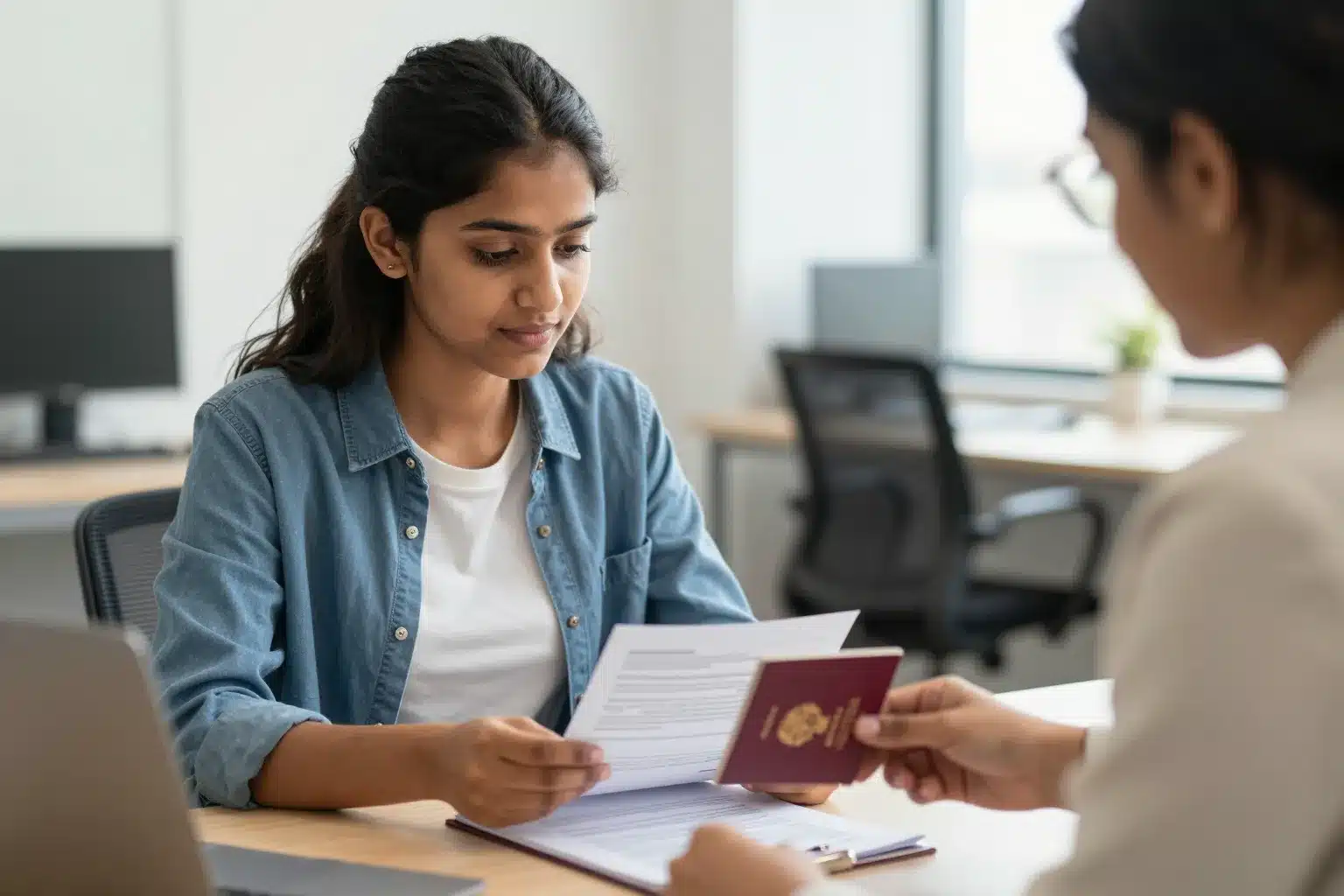
Quick answer: To get a UK student visa in 2026, Indian students need nine core documents and conditions: a valid passport, a CAS letter from a licensed sponsor, IELTS/PTE UKVI proof of English proficiency, maintenance funds held for 28 consecutive days, a TB test certificate, IHS payment, an ATAS certificate (for select STEM/medical courses), parental consent if under 18, and completed biometrics. Miss any one of these and the Home Office can refuse the application outright.
Every year, thousands of Indian students who were genuinely eligible for a UK Student visa lose their offer letter, their deposit, and sometimes an entire intake — not because they weren’t qualified, but because one document didn’t match the Home Office’s exact format. A bank statement one day too old. A CAS number that expired before biometrics. A TB certificate from a clinic that wasn’t on the approved list.
If you’re applying for September or January intake, this guide walks through every requirement in the order UK Visas and Immigration (UKVI) actually checks them, what each one costs in 2026, and the mistakes that quietly sink otherwise-strong applications.
Table of Contents
- What Are the UK Student Visa Requirements for Indian Students?
- The 9 Core UK Student Visa Requirements
- UK Student Visa Application Process — Step by Step
- UK Student Visa Cost Breakdown 2026
- Standard vs Priority vs Super Priority Processing
- Applying Yourself vs Through an Education Consultant
- Common Mistakes That Get Applications Rejected
- Expert Tips From 15 Years of Counselling Indian Students
- Real Student Success Stories
- FAQs
What Are the UK Student Visa Requirements for Indian Students in 2026?
The UK Student visa (formerly Tier 4) requires applicants to prove four things to UK Visas and Immigration: that they have a genuine offer from a licensed institution, that they can financially support themselves, that they meet the English language standard, and that they pass health and identity checks. Every document you submit exists to prove one of these four things — nothing else.
Indian applicants apply through the UK government’s official student visa portal and typically submit biometrics at a VFS Global centre in India. Processing for applications made from outside the UK usually takes about 3 weeks under standard service, though this varies by season.
The 9 Core UK Student Visa Requirements for Indian Students

1. A Valid Passport
Your passport must have at least one blank page and, ideally, validity covering your full course duration. If your passport is close to expiry, renew it before applying — a mid-course renewal is possible but adds friction with biometric residence updates.
2. CAS — Confirmation of Acceptance for Studies
The CAS is a unique reference number your university issues once you’ve accepted an unconditional offer and paid any required deposit. It contains your course details, fees, and sponsor licence number, and it’s the single document the entire visa application is built around. A CAS is valid for six months from the date of issue — apply for your visa well within that window, because an expired CAS means starting the sponsorship process over.
3. Proof of English Language Proficiency
Most Indian applicants need to prove English ability through an approved Secure English Language Test (SELT) — IELTS for UKVI or PTE Academic UKVI are the two most commonly accepted. Universities set their own minimum band scores, typically 6.0–6.5 overall for undergraduate and 6.5–7.0 for postgraduate courses, but always confirm the exact requirement with your university and the official UKVI English requirements page, since some universities offer exemptions for students with an all-English medium academic background.
4. Maintenance Funds — The 28-Day Rule
This is where most rejections happen. You must show you can cover:
- Full tuition fees for the first year (minus any deposit already paid to the university), and
- Living costs of £1,483/month if studying in London, or £1,136/month outside London, for up to 9 months.
The catch: this exact amount must sit in your account, untouched, for 28 consecutive days, and your final bank statement must be dated within 31 days of submitting your application. If the balance dips even briefly during that window — a single UPI transfer out and back in — UKVI can refuse the application. For a full breakdown of what studying in the UK actually costs beyond the visa minimum, see our guide on the real costs of studying in the UK for Indian students.
5. Tuberculosis (TB) Test Certificate
Every Indian applicant must take a TB test at a Home Office-approved clinic in India — a chest X-ray, not a blood test. The certificate is valid for six months. Book early; approved clinics in major Indian cities often have a multi-day wait during peak intake season.
6. Immigration Health Surcharge (IHS)
The IHS gives you access to the UK’s National Health Service for the length of your course. It’s paid online as part of the visa application and is calculated per year of your course — see the cost table below. Pay through the official IHS calculator on gov.uk only; third-party “IHS payment services” that charge a markup are unnecessary.
7. ATAS Certificate (If Applicable)
If your course falls under certain sensitive subject areas — advanced engineering, certain physics, materials science, or specific medical research fields — you’ll need an Academic Technology Approval Scheme (ATAS) certificate before your visa can be approved. Most business, humanities, arts, and standard STEM courses don’t require it, but always check with your university’s international office, since applying late for ATAS is one of the most common causes of visa delay for STEM postgraduates.
8. Parental/Guardian Consent (Under 18)
If you’re 16 or 17 when you apply, you’ll need written consent from both parents or your legal guardian, along with proof of your relationship to them and confirmation of your travel and care arrangements in the UK.
9. Biometric Information & Application Form
The final step is completing the online application form and booking a biometric appointment at your nearest VFS Global centre, where your fingerprints and photograph are captured. This appointment is also frequently where a short verification interview happens, so treat it as part of the requirement, not a formality.
UK Student Visa Application Process — Step by Step
| Step | What Happens | Typical Timing |
|---|---|---|
| 1 | Receive unconditional offer & pay deposit | As soon as offer is confirmed |
| 2 | University issues CAS | Valid for 6 months |
| 3 | Build maintenance funds & let them season | 28 consecutive days before applying |
| 4 | Book & complete TB test | Valid for 6 months; book 2-3 weeks ahead |
| 5 | Complete online visa application & pay IHS | Up to 6 months before course start |
| 6 | Book biometric appointment at VFS Global | Within days of online application |
| 7 | Attend appointment, submit documents | Same day as biometrics |
| 8 | Await decision | ~3 weeks (standard service) |
| 9 | Collect passport with visa vignette / receive eVisa confirmation | After decision |
UK Student Visa Cost Breakdown 2026
| Fee | Approximate Cost | Notes |
|---|---|---|
| Visa application fee (outside UK) | £524 | Standard Student visa fee |
| Immigration Health Surcharge (IHS) | £776 per year of course | Paid upfront for full course length |
| TB test | ₹3,000–₹5,000 | Varies by approved clinic/city |
| VFS Global service fee | Approx. ₹2,500–₹3,500 | For biometric appointment handling |
| Priority service (optional) | Approx. £500 extra | 5 working day decision |
| Super priority service (optional) | Approx. £1,000 extra | Next working day decision, subject to availability |
Figures are indicative for 2026 and change periodically — always confirm current fees on the official gov.uk student visa fees page before budgeting. For scholarship options that can offset these costs, see our roundup of UK scholarships for Indian students.
Standard vs Priority vs Super Priority Processing
| Service | Decision Time | Best For | Risk |
|---|---|---|---|
| Standard | ~3 weeks | Applicants with 6-8 weeks of buffer before course start | Low — most common route |
| Priority | 5 working days | Applicants applying close to deadline | Not guaranteed; availability varies by visa centre |
| Super Priority | Next working day | Last-minute or urgent cases | Frequently unavailable; expensive; not a substitute for early planning |
What Happens After Approval: eVisa and Digital Status
The UK has largely moved away from physical visa stickers (vignettes) to a digital eVisa system. Once approved, most applicants receive a short-validity travel vignette in their passport (usually 30-90 days) and are asked to create a UKVI account online to access their full digital immigration status before travelling. Screenshot your eVisa share code before you fly — airline check-in staff and UK Border Force sometimes ask for it separately from your passport, and losing account access mid-transit is a completely avoidable headache. If your course runs longer than six months, keep your CAS, offer letter, and IHS payment confirmation in your hand luggage as backup evidence, even though the eVisa itself is what officially matters.
Applying Yourself vs Through an Education Consultant
| Approach | Pros | Cons |
|---|---|---|
| Self-apply | No consultancy fee; full control over timeline | Easy to misjudge document formatting; no second check before submission |
| Through a counsellor/consultant | Documents reviewed against current Home Office standards before submission; CAS-to-visa timeline managed for you; support if refused | Consultancy fees apply; still requires your active participation for funds & documents |
Common Mistakes That Get UK Student Visa Applications Rejected
The single biggest cause of refusal isn’t ineligibility — it’s a document that doesn’t match UKVI’s exact expectations. The most frequent ones we see:
- Funds that don’t hold for the full 28 days — even a same-day transfer in and out breaks the seasoning requirement.
- CAS details that don’t match the visa application — course name, fee amount, or sponsor number entered incorrectly.
- TB certificates from non-approved clinics — always confirm the clinic appears on the Home Office’s approved list before booking.
- Bank statements in the wrong format — UKVI wants specific details (account holder name, account number, financial institution’s official stamp/letterhead) shown clearly on every page.
- Applying too early or too late — you can apply up to 6 months before your course starts, but not so late that TB results or biometrics can’t be processed in time.
We’ve documented these in far more depth, with real refusal patterns from 2026 cases, in our dedicated guide to UK student visa rejection reasons and how to avoid them.
Expert Tips From 15 Years of Counselling Indian Students
- Start the funds-seasoning clock the moment your CAS is issued, not after. Waiting to “finalise the amount” before starting the 28-day window is the single most common delay we see.
- Photocopy and label every document before you go to VFS. Officers move fast; a well-organised file reduces the chance of a document being overlooked.
- Don’t round your maintenance funds to the nearest lakh. Show the exact required figure plus a small buffer — large, unexplained round numbers sometimes draw additional scrutiny about source of funds.
- If your course involves engineering, physics, or certain medical research areas, ask about ATAS on day one of accepting your offer — not the week you plan to apply for your visa.
- Once your visa is granted, understand your work rights immediately. Most Student visa holders can work up to 20 hours a week during term time — plan your budget and part-time job search around this from the start using our guide to part-time jobs in the UK for international students.
Real Student Success Stories
The following are illustrative, composite scenarios based on common situations Indian students face during the UK visa process — not verified individual case studies.
Ananya, Pune — Scored well in her MSc Data Science offer from a Russell Group university but had her first visa attempt refused because her bank statement was dated 34 days before submission, just outside the 31-day window. On reapplication, with a fresh statement and the funds re-seasoned for the full 28 days, her visa was approved in 18 days. She’s now in her first year in Manchester.
Rohan, Ahmedabad — Applying for a mechanical engineering master’s, he didn’t realise his course needed ATAS clearance until three weeks before his intended visa submission. With guidance, he applied for ATAS immediately and adjusted his travel plans by three weeks rather than rushing an incomplete file. He started his course on schedule the following term.
Meera, Kochi — A first-generation study-abroad applicant whose family wasn’t sure how to structure the maintenance funds evidence across two joint accounts. With a clear breakdown of which account to consolidate funds into and when to start the 28-day clock, her application was approved on the first attempt, and she’s now completing her undergraduate degree in Leeds.
Vikram, Delhi — Initially planned to use the super priority service two days before his flight after delaying his TB test. He learned the hard way that super priority slots aren’t guaranteed to be available. After a stressful week, a slot opened up and his visa was approved just in time — a scenario he now tells every junior student to avoid by booking the TB test the day the CAS is issued.
Frequently Asked Questions
How much bank balance is required for a UK student visa?
You need to show your first year’s tuition fees (minus any deposit paid) plus living costs of £1,483/month (London) or £1,136/month (outside London) for up to 9 months, held continuously in your account for 28 days before applying.
How long does a UK student visa take to process from India?
Standard processing is approximately 3 weeks from the date of your biometric appointment. Priority (5 working days) and super priority (next working day) services exist but availability isn’t guaranteed.
Is IELTS compulsory for a UK student visa?
Not always — some universities waive it for students with an all-English-medium academic background, but most require an approved SELT like IELTS for UKVI or PTE Academic UKVI. Confirm directly with your university.
What is a CAS and how long is it valid?
CAS stands for Confirmation of Acceptance for Studies — a reference number your university issues once you accept your unconditional offer. It’s valid for 6 months, so apply for your visa within that window.
Can I work while on a UK student visa?
Most Student visa holders at degree level can work up to 20 hours a week during term time and full-time during official vacations, though this varies by course level and sponsor — always confirm your specific visa conditions.
What happens if my UK student visa is refused?
You’ll receive a refusal letter stating the specific reason. Depending on the ground for refusal, you may be able to reapply with corrected documentation, or in some cases request an administrative review. Understanding the exact refusal reason before reapplying is critical — see our detailed breakdown of common rejection causes.
Do I need a TB test for a UK student visa?
Yes, all applicants from India must complete a TB test (chest X-ray) at a Home Office-approved clinic, valid for 6 months from the test date.
How much does a UK student visa cost in total for Indian students?
Including the visa fee (£524), IHS (£776 per year of course), TB test, and VFS service charges, most Indian applicants budget roughly £1,500–£2,500 total depending on course length, before any optional priority service fees.
Can I apply for a UK student visa without an agent?
Yes — the application is designed to be completed independently through the official gov.uk portal. Many students self-apply successfully; a consultant adds value mainly through document review and CAS-to-visa timeline management, not through any special access you can’t get yourself.
Final Thoughts
None of these nine requirements are complicated on their own. What trips up genuinely eligible students is timing — starting the funds-seasoning clock too late, booking a TB test at the wrong clinic, or discovering an ATAS requirement with weeks to spare instead of months. Build your document file the day your CAS arrives, not the week before your visa appointment, and the process becomes far more predictable than it looks from the outside.
If you’re planning your UK application for the 2026 intake and want a second set of eyes on your documents before you submit, RiseUpEdu’s counselling team reviews visa files for Indian students every week and can help you avoid the exact mistakes covered above. A short consultation costs nothing and can save you an entire intake cycle if something in your file needs fixing.
Follow RiseUpEdu for regular UK visa and admissions updates: Instagram | Facebook | Threads | Snapchat
About the Author – M Fazeel
M Fazeel is a highly experienced admission counsellor with over 15 years of expertise in guiding students across India and abroad. Recognised among the top education counsellors in India, he has successfully mentored thousands of students who are now pursuing or have completed their education in leading institutions in India and overseas.
He is a well-educated researcher and author, known for providing practical, result-oriented guidance in career and admission planning. M Fazeel also holds professional certifications from the Indian Institute of Technology Delhi, further strengthening his credibility and expertise in the education domain.
LinkedIn: Mohammed Fazeel | Twitter: @fazeelkhan7