
Quick answer: A GIC for Canada student visa is a Guaranteed Investment Certificate (GIC) — a fixed-term deposit held at a Canadian bank — that Indian students use as proof of funds for a Canada study permit. As of September 1, 2025, IRCC requires a single applicant to show CAD 22,895 in living-expense funds (CAD 24,617 if you’re headed to Quebec), on top of full tuition and a return airfare. Opening a GIC is not mandatory anymore — the Student Direct Stream that once forced it closed on November 8, 2024 — but it is still the single piece of evidence visa officers trust the most, because it proves the money is real, sitting in Canada, and can’t quietly disappear before your visa interview.
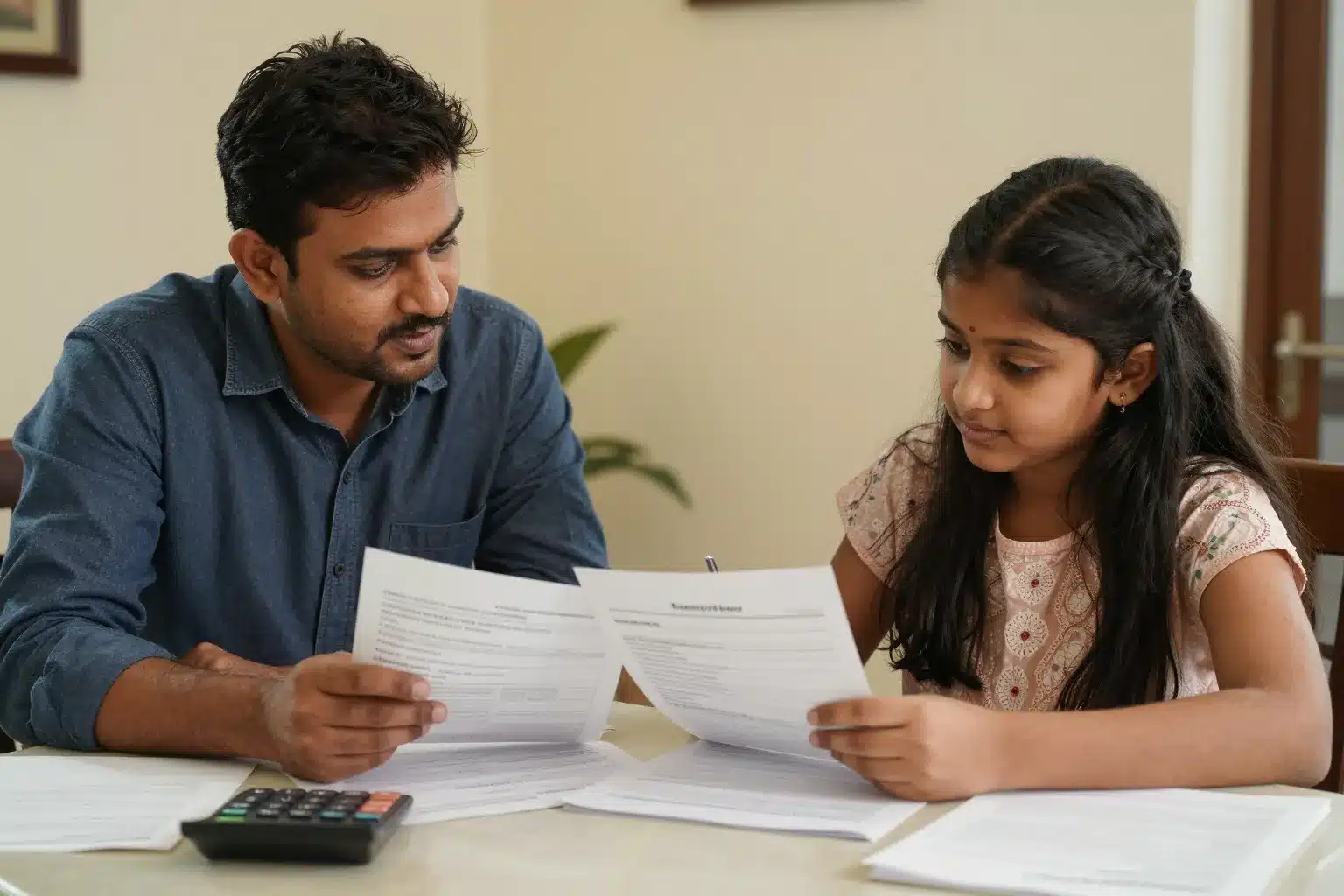
Here’s the part almost nobody explains properly: once you fund a GIC, roughly ₹19 lakh of your family’s savings gets locked into a Canadian bank account for up to a year, released back to you in small monthly instalments after you land. Parents who don’t understand this in advance often panic three months into the program when the “full amount” they wired never shows up as a lump sum in their child’s account. That confusion, more than any embassy rejection, is what causes the most stress around this single financial instrument.
RiseUpEdu has walked hundreds of Indian families through this exact process for the Fall 2026 and Winter 2027 intakes. This guide covers the real 2026 numbers, which banks actually work well from India, how the money gets released after you land, what gets applications flagged, and the alternatives if a GIC doesn’t fit your situation.
Table of Contents
- What Is a GIC, and Do You Still Need One in 2026?
- How Much GIC Do You Need? The 2026 Numbers
- Step-by-Step: How to Open a GIC From India
- Which Bank Should You Choose? Comparison Table
- How the Money Comes Back to You After You Land
- GIC vs Other Proof of Funds: Pros and Cons
- 7 Mistakes That Delay or Sink a GIC-Backed Application
- What Happens to Your GIC If the Visa Is Refused?
- GIC vs Education Loan vs Blocked Account
- Expert Tips From a Counsellor’s Desk
- Real Student Success Stories
- FAQs
What Is a GIC for Canada Student Visa, and Do You Still Need One in 2026?
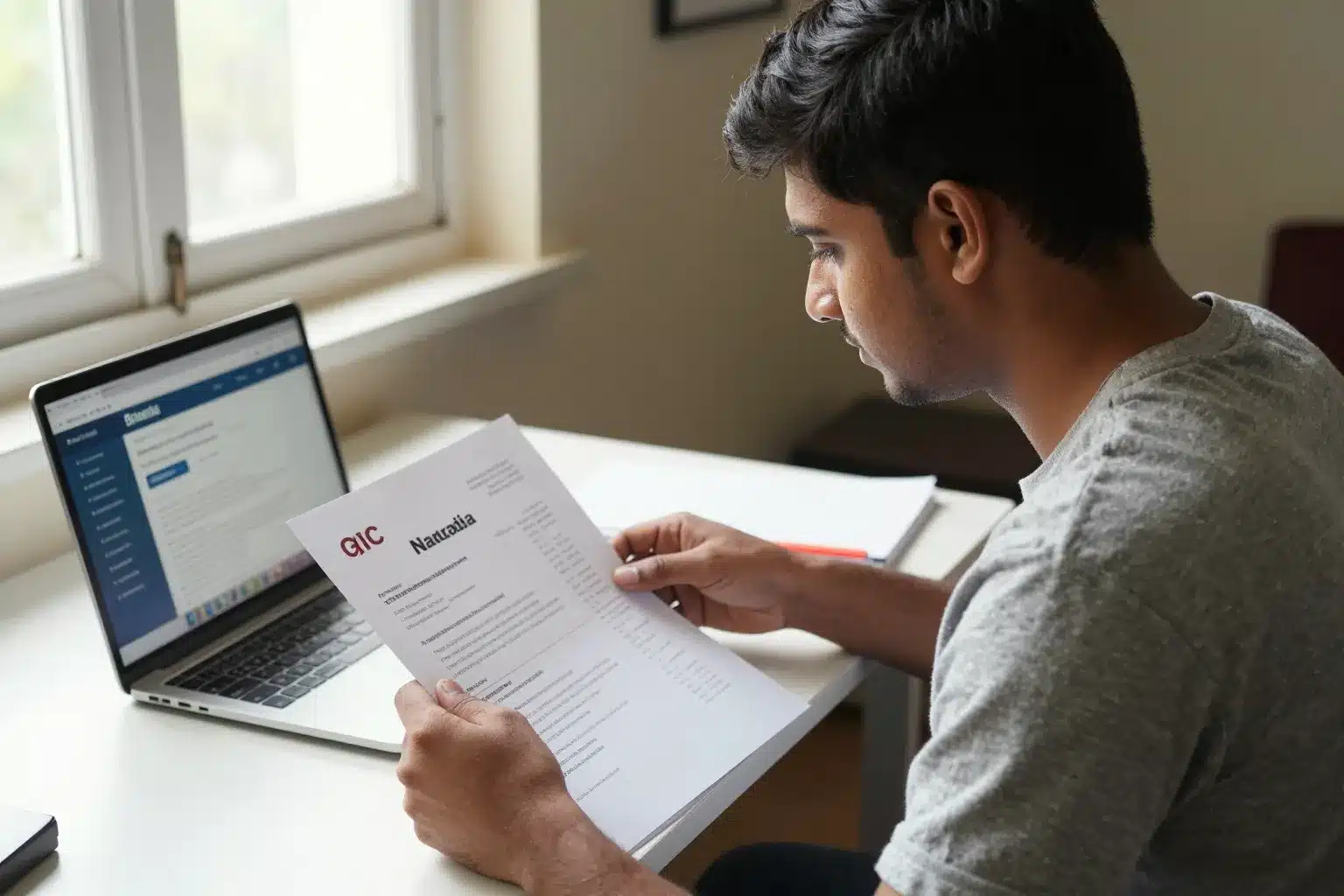
A Guaranteed Investment Certificate is exactly what it sounds like — a term deposit issued by a Canadian financial institution that guarantees your principal plus a fixed rate of interest, provided you leave the money in until it matures. For international students, banks built a specific version of this product: you fund it from India before your study permit is approved, the bank issues an investment directed letter and a receipt confirming the deposit, and you submit that letter with your application as proof you can support yourself in Canada.
Until November 8, 2024, Indian applicants using the Student Direct Stream (SDS) had no choice — a GIC from an approved bank was mandatory alongside upfront tuition payment and a language test score. IRCC scrapped SDS entirely that day, and every Indian student now applies through the regular study permit stream, where a GIC is technically optional. You can, in principle, submit bank statements, an education loan sanction letter, or a combination of sponsor documents instead.
In practice, RiseUpEdu still recommends a GIC for most first-time applicants. Visa officers reviewing thousands of files a week give more weight to a document that is standardised, verifiable in seconds through the issuing bank, and impossible to fake with a screenshot. A six-month bank statement showing a sudden large deposit — common when families borrow money just before applying — invites more questions than it answers. A GIC doesn’t.
How Much GIC Do You Need? The 2026 Numbers
IRCC recalculates the cost-of-living threshold every September 1, tied to Statistics Canada’s low-income cut-off. The current figures, effective for applications filed on or after September 1, 2025, are:
| Destination | Minimum Living-Expense Funds (Year 1) | Approx. INR (at ~₹61/CAD) |
|---|---|---|
| Any province/territory except Quebec | CAD 22,895 | ≈ ₹13.97 lakh |
| Quebec (effective Jan 1, 2026) | CAD 24,617 | ≈ ₹15.02 lakh |
| Each accompanying family member (spouse/child) | Additional CAD 6,000–7,000 approx. | ≈ ₹3.7–4.3 lakh |
This is the living-expense component only. Your total proof-of-funds package still needs first-year tuition paid or documented separately, plus a return airfare allowance of roughly CAD 1,300–2,000. A GIC of CAD 22,895–24,617 covers only the living-cost portion — it does not replace your tuition receipt.
Two things trip up almost every family we counsel. First, the amount is per applicant, not per household — if your spouse is coming on a spousal open work permit, you generally don’t need a second GIC for them, but IRCC still expects your combined bank statements to reflect their presence. Second, this figure moves every year. A friend who studied in 2023 will quote you CAD 20,635, and an agent still working off 2024 material may quote CAD 20,635 too. Confirm the live number on IRCC’s official page before you wire a single rupee.
Step-by-Step: How to Open a GIC for Canada Student Visa Approval
The mechanics are similar across banks, though timelines vary by two or three business days.
- Get your Letter of Acceptance (LOA) from a Canadian DLI first. Every GIC provider asks for it before opening an account, since it confirms you’re a genuine applicant, not a speculative depositor.
- Choose your bank and apply online through the bank’s international-student GIC portal (Scotiabank, CIBC, and ICICI Bank Canada all run India-facing versions of this).
- Complete identity verification — passport copy, LOA, and in most cases a short video KYC call, since you don’t yet have a Canadian address or SIN.
- Wire the funds in CAD from an Indian bank account or through an authorised money-transfer partner. Most banks quote 3–7 business days for the transfer to reflect and the GIC to be issued once funds clear.
- Receive your Investment Directed Letter and GIC certificate — this is the document you upload with your study permit application, not a plain bank statement.
- Submit your study permit application with the GIC letter, LOA, tuition receipt, medical exam (if required), and biometrics appointment confirmation.
- Open your Canadian bank account in person within the window your bank specifies after you land — usually 14 to 60 days — to start receiving the disbursed funds.
Build in at least three weeks between your LOA and your visa submission purely for the GIC to clear. Students who leave this to the last fortnight before an intake deadline are the ones who end up paying rush-processing fees or missing the semester entirely.
Which Bank Should You Choose? Comparison Table
Choosing the right bank for your GIC for Canada student visa matters more than most consultants admit. Interest rates and account-opening friction differ more than most consultants admit. Here’s how the main options compare for an Indian applicant opening one from home.
| Bank | Applies From India | Typical Processing Time | Approx. Interest Rate* | Best For |
|---|---|---|---|---|
| Scotiabank (StartRight Program) | Yes, fully online | 3–5 business days | ~2.5–3.0% | Fastest online setup, widest branch network for account activation on arrival |
| CIBC International Student GIC | Yes | 4–6 business days | ~2.0–2.5% | Students heading to Ontario and the Prairies with strong CIBC branch coverage |
| ICICI Bank Canada | Yes, via ICICI India relationship | 3–7 business days | ~2.0–2.5% | Families who already bank with ICICI in India and want a familiar interface |
| SBI Canada | Yes, through SBI’s NRI/global desk | 5–8 business days | ~1.8–2.3% | Applicants who prefer a public-sector-linked process and existing SBI accounts |
*Rates change with Bank of Canada policy and are illustrative only — confirm the live rate directly with the bank before transferring funds.
A word of caution: chasing the highest advertised interest rate is a low-value exercise. On CAD 22,895 held for a year, the difference between a 2.0% and a 3.0% GIC is roughly CAD 230 — useful, but not worth choosing a bank with a slower online process or thin support for Indian applicants. Processing speed and reliable customer support during your first stressful weeks in Canada matter more than half a percentage point.

How the Money Comes Back to You After You Land
This is the section most agents skip, and it’s the one that causes the most anxiety three months into the program. Your GIC is not released as one lump sum on arrival. The standard structure looks like this:
- Initial disbursement: around CAD 2,000 is released into your new Canadian bank account shortly after you open it in person, to cover immediate settling-in costs.
- Remaining balance: the rest — roughly CAD 20,895 — plus the interest earned, is paid out in equal monthly instalments over the following 10 to 12 months.
- Early withdrawal: most student GICs are non-cashable before maturity. If you need emergency access to the full balance, expect resistance from the bank and possible loss of accrued interest.
Tell your parents this before they wire the money, not after. Many Indian families assume the entire ₹14 lakh becomes spendable the week their child lands, then panic when rent and grocery bills exceed what’s actually available that month. Budget your first year around the monthly instalment, plus whatever part-time work income your study permit allows, not around the headline GIC figure.
GIC vs Other Proof of Funds: Pros and Cons
| Pros | Cons | |
|---|---|---|
| GIC | Standardised, fast to verify, strongly trusted by visa officers, builds a Canadian banking relationship before arrival | Locks a large sum for up to a year; early withdrawal is difficult; requires a foreign currency transfer |
| Bank statements only | No funds locked; flexible; keeps money accessible to the family | Sudden large deposits invite scrutiny; requires 4–6 months of “seasoned” funds; more documentation to assemble |
| Education loan sanction letter | Doesn’t require liquid savings upfront; can cover tuition and living costs together | Interest accrues from disbursement in some schemes; loan processing itself can take 4–8 weeks |
| Sponsor affidavit + sponsor’s funds | Useful when the primary applicant has no independent funds | Requires proving the sponsor’s relationship and income source; adds a layer of scrutiny |
7 Mistakes That Delay or Sink a GIC for Canada Student Visa Application
- Opening the GIC before getting the LOA. Banks reject or delay applications without it — always get your acceptance letter first.
- Sending the exact minimum amount, to the rupee. Currency conversion timing means CAD 22,895 today might fall short by the time your bank processes the transfer. Add a small buffer.
- Uploading the wrong document. A regular fixed-deposit receipt from an Indian bank is not the same as a Canadian bank’s Investment Directed Letter — visa officers specifically look for the latter.
- Assuming the SDS-era rules still apply. Some older checklists still describe SDS-specific bank lists and processing promises. SDS closed in November 2024; treat any guide dated before that with caution.
- Not budgeting for the transfer and admin fees. Wire charges, currency conversion spread, and a typical CAD 150–200 GIC administration fee are separate from the CAD 22,895 principal.
- Leaving it to the last three weeks before the intake deadline. Between LOA, GIC issuance, biometrics, and visa processing, rushing compresses a process that needs breathing room.
- Forgetting to open the Canadian account within the specified window after landing. Miss this and your disbursement schedule gets delayed, sometimes by weeks.
What Happens to Your GIC If the Visa Is Refused?
If your study permit is refused, the GIC principal is refundable — banks aren’t in the business of keeping money attached to a visa that never materialised. What you should expect:
- You’ll need to submit your refusal letter and supporting documents to the bank’s international student GIC desk.
- Most banks process the refund back to the originating Indian account within 2–6 weeks.
- An administration fee — typically around CAD 200 — is usually non-refundable.
- Any interest accrued up to the point of closure is generally paid out along with the principal.
Keep every document — the original wire transfer receipt, the GIC certificate, and the refusal letter — until the refund physically reflects in your Indian account. Families who discard paperwork early sometimes find the refund process takes far longer than it should.
GIC vs Education Loan vs Blocked Account
Canada doesn’t have a German-style “blocked account,” so Indian applicants sometimes confuse the GIC with that concept. They’re not identical. A GIC is a Canadian investment product tied to your study permit application specifically; a blocked account (common for Germany) is a separate escrow-style account that releases a fixed monthly sum regardless of your visa outcome. For Canada, your realistic choices are a GIC, seasoned bank statements, or an education loan sanction letter — sometimes combined, since IRCC accepts a mix of evidence as long as the total meets the threshold.
If your family already has an education loan sanctioned for the full first-year cost, you may not need a separate GIC at all — the sanction letter, along with proof of disbursement readiness, can satisfy the financial requirement on its own. This is worth discussing with a counsellor before locking funds unnecessarily into two instruments at once.
Expert Tips From a Counsellor’s Desk
After sitting across the table from hundreds of Indian families on this exact decision, a few patterns hold up consistently. Don’t wire the bare minimum — visa officers have seen enough files to notice when a deposit lands at exactly the published threshold with nothing to spare, and it can read as a stretch rather than genuine financial stability. Where possible, pair the GIC with six months of clean, unremarkable bank statements from the sponsor’s account; a boring statement is a strong statement. And confirm your specific university’s intake deadline against the bank’s stated processing window before you assume three weeks is enough — some banks slow down noticeably during peak intake months of May, June, and December.
Real Student Success Stories
The following are illustrative, composite scenarios based on situations Indian students commonly face — not verified individual case studies.
Priya, Ahmedabad — Diploma in Business Management, Ontario. Priya’s family had the CAD 22,895 ready but almost sent it through an informal money-transfer agent to save on fees. RiseUpEdu flagged that unregulated transfers can trigger extra scrutiny on the source-of-funds question during biometrics. She routed it through her bank’s standard wire instead, added a CAD 500 buffer for conversion timing, and her Scotiabank GIC letter was issued in four business days. Her study permit was approved five weeks later.
Rohit, Ludhiana — Post-Graduate Diploma in Supply Chain, British Columbia. Rohit assumed the full GIC amount would be available the month he landed and had already planned a laptop upgrade and a security deposit around that figure. When only CAD 2,000 plus his part-time job income showed up, he had to adjust fast. He now tells every junior he mentors: budget your first three months around the initial disbursement only, not the total GIC value.
Simran, Jalandhar — Bachelor of Commerce, Manitoba. Simran’s family leaned on an education loan instead of a GIC, since their bank’s sanction letter alone covered both tuition and the living-cost threshold. It saved them from locking a second lakh of savings unnecessarily, but it meant extra paperwork proving the loan’s disbursement schedule to IRCC. With RiseUpEdu structuring the cover letter, the application went through without a request for additional documents.
Arjun, Kochi — Master’s in Data Analytics, Quebec. Arjun almost budgeted using the non-Quebec figure of CAD 22,895 before a counsellor caught that his program was in Montreal, which meant CAD 24,617 was the real threshold. Missing that difference by even a few hundred dollars can trigger a request for further documents that pushes an application past an intake deadline. He corrected it two weeks before submission and received his visa in time for the Winter 2026 intake.
FAQs
Is a GIC for Canada student visa mandatory in 2026?
No. It became optional once the Student Direct Stream closed on November 8, 2024. It remains the most trusted single document for proving funds, but bank statements, education loan sanction letters, or a combination can also satisfy IRCC’s requirement.
How much GIC do I need for Canada in 2026?
CAD 22,895 for a single applicant heading anywhere outside Quebec, and CAD 24,617 for Quebec, effective from the relevant 2025–2026 adjustment dates. This covers living expenses only, separate from tuition and travel costs.
Which bank is best for a GIC for Indian students?
Scotiabank, CIBC, ICICI Bank Canada, and SBI Canada are the most commonly used by Indian applicants. Scotiabank’s StartRight program is generally the fastest fully online option; ICICI and SBI suit families who already have an Indian banking relationship with those groups.
Can I withdraw my GIC money early if I change my mind?
Most student GICs are non-cashable before maturity. Early withdrawal is difficult and may cost you the accrued interest, so only fund a GIC once your decision to study in Canada is firm.
What happens to my GIC if my study permit is refused?
The principal is refundable to your Indian account, usually within 2–6 weeks, though an administration fee of around CAD 200 is typically non-refundable. Keep your refusal letter and original GIC documents to speed up the process.
Do I get the full GIC amount when I land in Canada?
No. An initial CAD 2,000 is released after you open your Canadian bank account, with the remaining balance and interest paid out in equal monthly instalments over roughly 10–12 months.
Is a GIC better than an education loan for proving funds?
It depends on your family’s finances. A GIC locks savings you already have; an education loan avoids locking cash but adds interest costs and a longer sanction process. Many families use a combination — check with a counsellor before committing to either exclusively.
Do I need a separate GIC for my spouse if they’re joining me in Canada?
Not usually a second full GIC, but IRCC expects your combined bank statements and financial documents to reflect your spouse’s presence and costs. This is worth confirming case-by-case, especially alongside Canada spousal open work permit eligibility, which has its own strict program requirements since January 2025.
The Bottom Line
A GIC for Canada student visa isn’t a bureaucratic hoop to jump through — it’s the clearest way to show a visa officer that your family’s money is real, accessible, and sitting exactly where you say it is. The numbers for 2026 are firm: CAD 22,895 outside Quebec, CAD 24,617 within it, released back to you gradually rather than all at once. Get the sequencing right — LOA first, GIC second, buffer for currency timing, and a bank that processes quickly — and this becomes one of the more predictable parts of your Canada study permit application, not the stressful unknown it looks like on day one.
If your family is weighing a GIC against an education loan, or you’re not sure how the CAD 22,895 threshold fits alongside your total cost of studying in Canada, RiseUpEdu’s counsellors can map out the exact numbers for your specific university and province before you transfer a single rupee. We’ve helped families avoid locking money into the wrong instrument, and we’ll give you the same honest math we’d give our own relatives.
Book a free consultation with our team, and while you’re planning, it’s worth reviewing the most common Canada student visa rejection reasons, realistic visa processing timelines, and current Canada scholarships for Indian students that could reduce how much you need to prove in the first place.
Stay updated on visa and immigration rule changes on our Instagram, Facebook, and Threads.
About the Author – M Fazeel
M Fazeel is a highly experienced admission counsellor with over 15 years of expertise in guiding students across India and abroad. Recognised among the top education counsellors in India, he has successfully mentored thousands of students who are now pursuing or have completed their education in leading institutions in India and overseas.
He is a well-educated researcher and author, known for providing practical, result-oriented guidance in career and admission planning. M Fazeel also holds professional certifications from the Indian Institute of Technology Delhi, further strengthening his credibility and expertise in the education domain.
LinkedIn: https://www.linkedin.com/in/mohammed-fazeel-9a543722/
Twitter: https://x.com/fazeelkhan7