

Quick answer: Since January 21, 2025, your spouse or common-law partner can only get a Canada spousal open work permit (SOWP) if you’re enrolled full-time at a public (or otherwise qualifying) Designated Learning Institution in a master’s program of 16 months or longer, a doctoral (PhD) program, a short list of professional degree programs — including university-level nursing, education, and engineering bachelor’s degrees, not just postgraduate ones — or a named provincial pilot program. A standard bachelor’s degree, a college diploma, or a 12-month accelerated master’s (the classic fast-track MBA) no longer qualifies your spouse for anything, no matter how strong your bank balance is.
This one rule has quietly broken more family budgets than any visa refusal letter. Thousands of Indian couples planned their move to Canada around a simple, comfortable assumption: one of you studies, the other works, and two incomes carry the household through a two- or three-year program. That assumption stopped being true for most applicants on January 21, 2025, and RiseUpEdu still gets calls every week from students who signed a tuition deposit before checking whether their program still qualifies.
The frustrating part is that the confusion isn’t really the couples’ fault. Education agents in Punjab, Gujarat, and Kerala are still quoting 2023 rules because that’s what got their last batch of clients through. Some Canadian college marketing brochures haven’t been updated either. If you’re planning a 2026 or 2027 intake and your spouse’s income matters to your family’s math — and for most Indian families it does — you need the current rule, not the one your cousin used three years ago.
Table of Contents
- What Is the Canada Spousal Open Work Permit, and Why Was It Restricted?
- Who Actually Qualifies in 2026? Program-by-Program Breakdown
- Eligible vs Non-Eligible Programs: The Comparison Table
- Canada vs UK vs Australia: How Do the Spousal Rules Compare?
- Documents, Fees & Processing Timeline
- How to Apply: Step-by-Step
- Pros and Cons of Choosing an SOWP-Eligible Program
- 5 Mistakes Indian Applicants Keep Making
- If Your Spouse Doesn’t Qualify: 4 Realistic Alternatives
- From Spousal Work Permit to Permanent Residency
- Expert Tips From a Counsellor’s Desk
- Real Student Success Stories
- FAQs
What Is the Canada Spousal Open Work Permit, and Why Was It Restricted?
A spousal open work permit (SOWP) lets your husband, wife, or common-law partner work for almost any employer in Canada, in almost any job, without a specific job offer lined up first. It’s the opposite of an employer-specific work permit — your spouse isn’t tied to one company, one city, or one role. Before January 2025, this permit was available to spouses of nearly every international student holding a valid study permit, from a one-year college diploma to a full PhD.
That changed because the numbers got too big to ignore. According to Immigration, Refugees and Citizenship Canada’s (IRCC) own policy rationale, the number of active spousal open work permits tied to international students climbed sharply between 2019 and 2024, and the government flagged two concerns: housing pressure in cities like Toronto, Brampton, and Vancouver, and cases where a short, low-cost study program looked like it existed mainly to get a spouse into the Canadian labour market rather than for genuine study. Whether or not every affected family fit that description, the policy response was blunt — it cut eligibility down to a narrow list of program types, effective for applications submitted on or after January 21, 2025.
If you already held a valid SOWP before that date, you could keep using it until it expired. Renewals and fresh applications, though, are judged entirely against the new rules — and that’s the part still catching couples off guard in 2026.
Who Actually Qualifies in 2026? Program-by-Program Breakdown
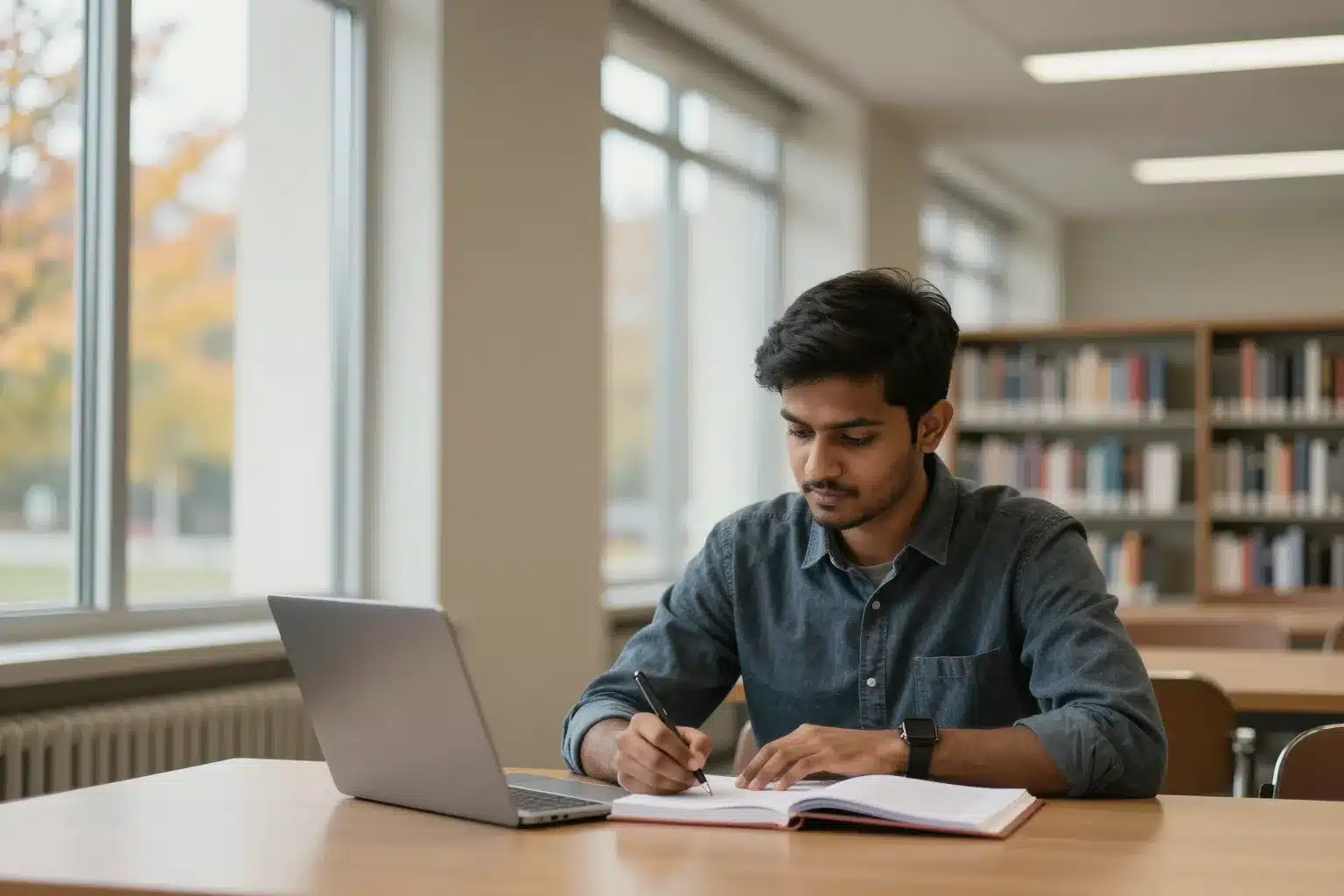
Under the current rules, your spouse or common-law partner can apply for a Canada spousal open work permit only if you hold a valid study permit and you’re studying full-time at a qualifying Designated Learning Institution (DLI) in one of these categories.
Master’s programs of 16 months or longer
This is the route most Indian applicants use. The 16-month figure is measured by the program’s stated length, not by how long you’ve personally been enrolled — a two-year MEng, MSc, or MA clears the bar comfortably. The trap is the accelerated one-year MBA, historically the single most popular program among married Indian applicants heading to Canada. A 12-month MBA no longer qualifies your spouse, full stop, even at a well-known public university.
Doctoral (PhD) programs, any length
There’s no minimum duration for PhD students. If you’re admitted into a doctoral program at a qualifying DLI, your spouse is eligible from day one of your studies.
Professional degree programs — including bachelor’s-level ones
This is where most competing guides get it wrong, and it matters. IRCC’s list of qualifying professional programs isn’t limited to postgraduate study. Several are bachelor’s degrees, provided they’re delivered at a university (not a college) and lead to a regulated profession:
- Doctor of Medicine (MD)
- Doctor of Dental Surgery (DDS, DMD)
- Doctor of Veterinary Medicine (DVM)
- Doctor of Optometry (OD)
- Bachelor of Law or Juris Doctor (LLB, JD, BCL)
- Pharmacy (PharmD, BSc Pharm, BPharm)
- Bachelor of Science in Nursing (BScN, BSN, BNSc, BN)
- Bachelor of Education (BEd)
- Bachelor of Engineering (BEng, BE, BASc)
If you’re weighing a nursing or engineering pathway partly because your spouse’s income matters, an accredited university BScN or BEng can unlock the SOWP at the undergraduate level — something a plain BA, BSc, or BCom will never do.
Named provincial pilot programs
A short list of specific, named programs also qualifies, regardless of degree level, because IRCC carved out exceptions to address regional labour shortages:
| Program name | Province | Eligible from |
|---|---|---|
| Francophone Minority Communities Student Pilot (FMCSP) | Outside Quebec | August 26, 2024 |
| Internationally-recruited nurses recognition project | Quebec | April 30, 2024 |
| Respiratory therapist / medical technologist recognition projects | Quebec | January 21, 2025 |
| Supervised Practice Experience Partnership | Ontario | January 21, 2025 |
| Nurse Re-Entry (Red River College Polytechnic) | Manitoba | January 21, 2025 |
| Internationally Educated Midwives Bridging Program (UBC) | British Columbia | January 21, 2025 |
| Canadian Pharmacy Practice Program (UBC) | British Columbia | January 21, 2025 |
| Post-Degree Diploma: Nursing Practice in Canada (Langara College) | British Columbia | January 21, 2025 |
These are narrow and mostly healthcare-focused, but if you already work in nursing, pharmacy, or respiratory therapy back in India, one of them may be a faster route than a generic master’s.
Full-time enrolment is non-negotiable across every category. Drop to part-time for even one semester, and your spouse’s permit becomes invalid regardless of which program got you the SOWP in the first place. Your Canada study permit application and your spouse’s SOWP application move together — a mistake on one affects both.
Eligible vs Non-Eligible Programs: The Comparison Table
| Program Type | Spouse Eligible for SOWP? | Notes |
|---|---|---|
| Master’s degree, 16+ months, public university | Yes | Program length is what’s measured, not your personal completion timeline |
| PhD / doctoral program, any length | Yes | No minimum duration requirement |
| MD, DDS, DVM, OD, LLB/JD, PharmD | Yes | Must be at a university, leading to a regulated profession |
| BScN / BSN / BEd / BEng at a university | Yes | Bachelor’s level, but on the qualifying professional list |
| Named provincial pilot program (see table above) | Yes | Regardless of degree level |
| Accelerated master’s under 16 months (e.g. 1-year MBA) | No | The single biggest group that lost eligibility in January 2025 |
| Standard bachelor’s degree (BA, BSc, BCom, BBA) | No | Excluded regardless of institution reputation |
| College diploma or postgraduate certificate | No | Excluded even at public colleges and polytechnics |
| Most private DLI programs | No | A handful of exceptions exist for private institutions with provincial degree-granting authority |
Canada vs UK vs Australia: How Do the Spousal Rules Compare?
Canada isn’t the only country that’s tightened this door. If you’re deciding between destinations, or your Canada plan doesn’t clear the bar, it’s worth knowing how the alternatives actually compare rather than assuming any one country is easier.
| Country | Who can bring a spouse to work? | Spouse’s work rights if eligible |
|---|---|---|
| Canada | Master’s (16+ months), PhD, select professional degrees, named pilot programs | Open work permit — almost any employer, any role |
| United Kingdom | PhD/research postgrad students, or government-scholarship students on 6+ month awards (see our UK student dependent visa rules guide) | Generally unrestricted once on a dependant visa |
| Australia | Any student can apply to bring a partner (Subclass 500 Subsequent Entrant), but work rights depend on your course | Unrestricted only if you’re in a master’s or PhD program; capped at 48 hours per fortnight otherwise |
Australia’s rule works almost in reverse of the UK’s — it lets nearly anyone bring a partner, then restricts how much that partner can work unless the student is in a master’s or doctoral program. Canada and the UK both restrict entry itself at the course-selection stage. Practically, if your family’s plan depends on your spouse working close to full-time, a Canadian master’s of at least 16 months and an Australian master’s or PhD land you in a similar place — while a one-year Canadian diploma or a UK taught master’s leave your spouse with no legal path to work at all.
Documents, Fees & Processing Timeline
If your program qualifies, the Canada spousal open work permit application itself is document-heavy but predictable. Missing one item is the single most common reason applications stall.
| Item | Cost / Requirement | Notes |
|---|---|---|
| Work permit processing fee | ~$155 CAD | Confirm the current figure on IRCC’s fee page before paying — fees are revised periodically |
| Open work permit holder fee | ~$100 CAD | Charged in addition to the processing fee |
| Biometrics fee | ~$85 CAD | Waived if biometrics are already on file from a previous application |
| Proof of enrolment | Letter of acceptance, enrolment letter, or transcripts | Must clearly state program name, length, and full-time status |
| Proof of relationship | Marriage certificate, or 12 months of cohabitation evidence for common-law partners | Joint lease, joint bank account, and utility bills strengthen a common-law claim |
| Processing time (from within Canada) | Roughly 8–16 weeks | Check IRCC’s live processing-time tool, since this shifts with application volume |
| Processing time (from outside Canada) | Roughly 12–20 weeks | Varies by visa office |
Your spouse’s permit is generally valid for the same period as your own study permit — it doesn’t run longer than your studies do, and it doesn’t survive a switch to a non-qualifying program.
How to Apply: Step-by-Step
- Confirm your own program qualifies — check your letter of acceptance against the categories above before your spouse starts gathering documents.
- Create or sign in to an IRCC online account for your spouse, separate from your own study permit account.
- Use IRCC’s document checklist tool and answer the eligibility questions exactly as they apply to a spouse of a study permit holder — a wrong answer here can generate the wrong checklist entirely.
- Upload proof of your enrolment (acceptance letter, enrolment letter, or transcripts) plus proof of your relationship.
- Pay the processing, open work permit, and (if required) biometrics fees online.
- Complete biometrics at a collection point within the window IRCC specifies, if requested.
- Wait for a decision through the online portal — your spouse cannot legally start working until the permit is actually approved, even if they hold maintained status while the application processes.
Pros and Cons of Choosing an SOWP-Eligible Program
| Pros | Cons |
|---|---|
| Two incomes instead of one, which matters enormously against Canada’s cost of living | Eligible master’s and professional programs often cost more in tuition than a college diploma |
| Your spouse builds genuine Canadian work experience, which strengthens a future PR application | Master’s and PhD admissions are more competitive and document-heavy than college admissions |
| Open work permit means no employer sponsorship hunt for your spouse | Program length (16+ months, or multi-year PhD) delays your own graduation and PGWP timeline |
| Keeps your family together in one household rather than living apart | If you drop to part-time or switch programs, your spouse’s work authorization ends immediately |
5 Mistakes Indian Applicants Keep Making
1. Signing a tuition deposit before checking program eligibility
Families frequently pay a non-refundable deposit on a one-year diploma or accelerated MBA, then discover the Canada spousal open work permit door is closed after the fact. Check the program category against the list above before any payment, not after your offer letter arrives.
2. Trusting an agent who’s still quoting pre-2025 rules
Some local consultants genuinely don’t know the rule changed, because their information hasn’t been updated since their last successful case. Cross-check any advice against IRCC’s own official spousal work permit eligibility page before committing.
3. Assuming common-law status is automatic
Twelve months of continuous cohabitation isn’t a formality — IRCC wants a joint lease, joint bank account, and utility bills in both names, plus a statutory declaration. A relationship of a few months, even if serious, won’t meet the bar.
4. Not budgeting for the gap between arrival and permit approval
Your spouse cannot work while the SOWP is processing, even with maintained status. Plan your first three to four months in Canada on a single income, not two — our detailed breakdown of the cost of studying in Canada is a useful starting point for that single-income budget. Don’t sign a lease that assumes your spouse’s paycheck starts on day one.
5. Switching programs or dropping to part-time without checking the impact
If you transfer from a qualifying master’s to a shorter diploma, or reduce your course load, your spouse’s work authorization ends the moment your status changes — regardless of how much time is left on the physical permit. Always confirm the impact with your school’s international office before making any change.
If Your Spouse Doesn’t Qualify: 4 Realistic Alternatives
A non-qualifying program isn’t the end of the road. It just means the Canada spousal open work permit isn’t available, and you need a different plan.
- LMIA-based employer-specific work permit. A Canadian employer sponsors your spouse through a Labour Market Impact Assessment. It’s slower (often 4–6 months combined) and ties your spouse to one employer, but it’s a genuine path to legal work.
- A study permit of their own. Your spouse enrols as a student and gets standard off-campus work rights (up to 24 hours a week during term, full-time during scheduled breaks) — at the cost of a second tuition bill and a Provincial Attestation Letter (PAL) requirement for most programs. Checking current Canada scholarships for Indian students before committing to this route can offset a meaningful chunk of that second tuition bill.
- Provincial nominee or pilot streams. BC, Ontario, and Manitoba run employer-linked immigration streams that some spouses can access independently of your student status, though eligibility depends heavily on occupation and a job offer.
- A visitor record. No work rights at all, but it keeps your spouse legally in Canada while you explore the other three options or wait out your program.
What you should not do is let your spouse work informally while you sort this out. Unauthorized work in Canada carries real consequences — a removal order and future inadmissibility — and it can affect your own status too.
From Spousal Work Permit to Permanent Residency
If your spouse does qualify for a Canada spousal open work permit, the work experience they gain isn’t just extra income — it’s a genuine asset for your family’s Express Entry profile. Under the Comprehensive Ranking System (CRS), a spouse’s Canadian work experience contributes to the “spouse or partner factors” block, worth up to 40 points in total across education, language ability, and Canadian work experience combined. It’s a smaller slice than the up to 70–80 points available for the principal applicant’s own Canadian experience, but in a system where Express Entry draws regularly land in the 480–510 CRS range, every additional point narrows the gap.
The more common route in practice looks like this: you complete your program, transition onto a Post-Graduation Work Permit (PGWP), and your spouse’s SOWP either gets renewed under the extension provisions (if you’re in a PGWP-eligible program and not in your final term) or transitions alongside your new status. Both of you accumulating Canadian work experience for a year or more, then submitting an Express Entry profile together, is a materially stronger PR strategy than either of you doing it alone.
Worth flagging: IRCC has proposed changes for 2026 that would remove some spousal bonus points from the CRS grid. This hasn’t been finalized as of this writing, so treat the current point values as accurate for now, but re-check IRCC’s official CRS criteria page closer to your Express Entry submission date.
Expert Tips From a Counsellor’s Desk
- Get your program’s SOWP eligibility confirmed in writing by the university’s international office before you accept the offer — a verbal assurance from an agent isn’t worth the paper it’s not written on.
- If dual income is central to your plan, let it drive program selection, not the other way around. A 20-month MEng that qualifies your spouse is often the financially smarter choice over a cheaper diploma that doesn’t.
- Start the common-law documentation early if you’re not yet legally married — twelve months of paper trail can’t be manufactured after the fact.
- Budget three to four months on a single income regardless of how fast you expect the SOWP to process. Optimistic timelines cause more financial stress than conservative ones.
- Review your study permit’s own rejection risk before worrying about your spouse’s permit — if your study permit is refused, the SOWP conversation never even starts.

Real Student Success Stories
The following are illustrative, composite scenarios based on situations RiseUpEdu counsellors commonly see among Indian applicants, used to show how the 2025 rule changes actually play out. Names have been changed.
“We had our hearts set on a one-year MBA in Toronto until our counsellor pulled up the January 2025 rule and showed us it wouldn’t qualify my husband anymore. We switched to a 20-month Master of Engineering Management at the same university instead — slightly longer, but my husband got his open work permit four months after we landed. That second income is the only reason we’re not stressed about rent every month.” — Simran, illustrative scenario, Master of Engineering Management applicant
“I’m a nurse in Kerala, and I assumed my only route to Canada was a postgraduate diploma. Nobody had told me that a university BScN itself qualifies my husband for the spousal work permit, even at the bachelor’s level. We found an accredited program in Manitoba, and he’s now working full-time in logistics while I finish my degree.” — Anjali, illustrative scenario, BScN applicant
“Our agent told us any study permit gets you a spousal work permit — that’s what worked for his last three clients in 2023. By the time we found out that wasn’t true anymore, we’d already paid a deposit on a one-year diploma. We lost the deposit, but we regrouped, and I’m now in a PhD program instead. It took an extra application cycle, but my wife has been working here for eight months now.” — Vikram, illustrative scenario, PhD applicant
“Honestly, the hardest adjustment wasn’t the paperwork — it was accepting that our original plan, one of us studying a cheap one-year program while the other worked, just didn’t exist anymore. Once we stopped trying to make the old plan work and picked a 16-month master’s instead, everything else lined up a lot more logically.” — Rajeshwari, illustrative scenario, Master’s applicant
Frequently Asked Questions
Can my spouse get a Canada spousal open work permit if I’m doing a one-year college diploma?
No. Since January 21, 2025, college diplomas and postgraduate certificates — including at public colleges and polytechnics — no longer qualify a spouse for a Canada spousal open work permit, regardless of program length or the school’s reputation.
Does a bachelor’s degree ever qualify my spouse for the SOWP?
Yes, but only specific professional bachelor’s programs at a university: nursing (BScN/BSN), education (BEd), engineering (BEng/BE/BASc), and law (LLB/BCL). A standard BA, BSc, or BCom does not qualify, even at a top public university.
What counts as a common-law partner for SOWP purposes?
IRCC treats common-law partners the same as married spouses, provided you can show at least 12 months of continuous cohabitation — typically through a joint lease, joint bank account, utility bills in both names, and a statutory declaration of the relationship.
Can my spouse start working while the SOWP application is still processing?
No. Even with maintained (implied) status from an in-Canada application, your spouse cannot legally work until the permit is actually approved and issued. Budget for this gap rather than assuming income from day one.
What happens to my spouse’s work permit if I switch to a different program?
Their SOWP is directly tied to your study permit and program category. If you switch to a non-qualifying program or drop to part-time, your spouse’s work authorization ends immediately, regardless of the permit’s printed expiry date.
Is the Canada spousal open work permit the same as bringing dependent children?
No — the SOWP covers only your spouse or common-law partner. As of the current rules, dependent children of international students are not eligible for their own open work permit through your student status.
How much does the full Canada spousal open work permit application cost in total?
Budget roughly $340 CAD if biometrics are required (processing fee, open work permit holder fee, and biometrics combined), or around $255 CAD if biometrics are already on file from a previous application. Confirm exact current fees on IRCC’s official fee page before paying.
Can my spouse’s Canada spousal open work permit be renewed if my program takes longer than expected?
Yes, under the extension provisions, provided you remain enrolled full-time in a PGWP-eligible program at a DLI, remain in Canada, and are not in your final academic term when the extension is requested.
The Bottom Line
The rules that governed the Canada spousal open work permit before January 2025 are gone, and nothing suggests they’re coming back. If your family’s plan depends on your spouse working in Canada, that has to shape which program you apply to — not become a discovery you make after your offer letter arrives. A 16-month-plus master’s, a PhD, or a qualifying professional degree keeps the door open; almost everything else closes it.
None of this means Canada is off the table if your first-choice program doesn’t qualify. It means the decision needs real numbers behind it: your spouse’s occupation, your combined budget, and an honest look at whether an LMIA-based work permit or a second study permit makes more financial sense than forcing a program that isn’t right for you. RiseUpEdu’s counsellors review exactly this trade-off for Indian families every week — including cases where Canada isn’t the best fit and another country serves the family’s timeline and budget better.
If you’re choosing between a shorter, cheaper program and a longer one that keeps your spouse’s work rights intact, book a free consultation with our team before you pay any deposit. We’ll map out your specific program, occupation, and family situation honestly, the same way we would for our own relatives.
Stay updated on visa and immigration rule changes on our Instagram, Facebook, and Threads.
About the Author – M Fazeel
M Fazeel is a highly experienced admission counsellor with over 15 years of expertise in guiding students across India and abroad. Recognised among the top education counsellors in India, he has successfully mentored thousands of students who are now pursuing or have completed their education in leading institutions in India and overseas.
He is a well-educated researcher and author, known for providing practical, result-oriented guidance in career and admission planning. M Fazeel also holds professional certifications from the Indian Institute of Technology Delhi, further strengthening his credibility and expertise in the education domain.
LinkedIn: https://www.linkedin.com/in/mohammed-fazeel-9a543722/
Twitter: https://x.com/fazeelkhan7