
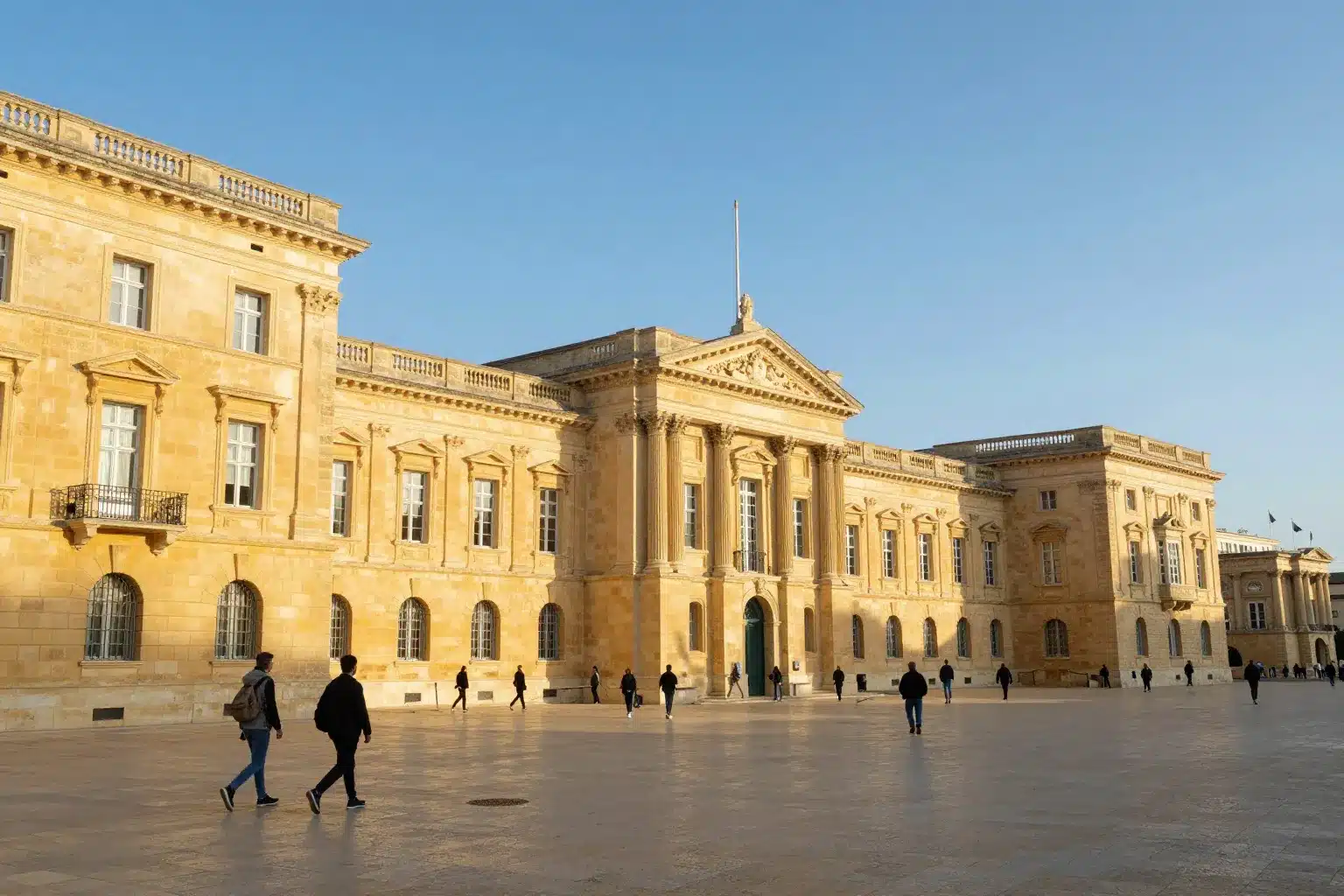
Direct answer: The best universities in Malta for Indian students in 2026 are the University of Malta (the country’s only public university, now ranked in the QS World University Rankings top 750), MCAST (the largest vocational and applied-degree institution), and three MFHEA-licensed private institutions — American University of Malta, Global College Malta, and St Martin’s Institute of Higher Education. Which one is “best” for you depends on your budget, your course, and whether you need a degree that transfers smoothly into a Master’s or PR pathway elsewhere in the EU — not on brand name alone.
If you’re Googling this at 11 PM with five browser tabs open and a consultant’s WhatsApp message you’re not sure you trust, you already know the real problem. It isn’t finding a university in Malta. It’s finding out, before you pay a single euro in tuition, whether the one you’ve shortlisted is actually recognised, actually worth the fee, and actually going to get your visa approved instead of adding you to the roughly 45% of Malta study visa applications that get rejected every year.
This guide compares every legitimate degree-granting institution in Malta side by side — fees, recognition status, QS standing, campus location, and who each one actually suits — written by a counsellor who has walked real Indian families through this exact decision more times than he can count.

Table of Contents
- Why Your University Choice Matters More Than Your Course
- How Many Universities Does Malta Actually Have?
- Best Universities in Malta for Indian Students: Full Comparison
- University of Malta — The Public University
- MCAST — Malta’s Vocational Powerhouse
- The Private, MFHEA-Licensed Institutions
- Public vs Private: Pros and Cons
- Cost, Eligibility & Application Timeline
- How to Actually Choose the Right One
- Common Mistakes Indian Students Make
- Expert Tips From 15 Years of Counselling
- Real Student Success Stories
- FAQs
Why Your University Choice Matters More Than Your Course
Most students research courses first and the institution second. In Malta, that order should flip.
Malta has one public university and a handful of private, degree-awarding colleges — all overseen by the Malta Further and Higher Education Authority (MFHEA), the regulator that replaced NCFHE in January 2021. An institution being “in Malta” tells you nothing. An institution being MFHEA-licensed with programme-level accreditation is what determines whether your degree is recognised by employers, other universities, and Indian equivalence bodies like AIU later on.
This matters because the Malta study visa rejection rate isn’t primarily about weak bank statements — it’s frequently about the Central Visa Unit questioning the legitimacy or capacity of the sponsoring institution. Choosing well here is a visa-safety decision, not just an academic one.
How Many Universities Does Malta Actually Have?
Malta is a small island nation, and its higher education sector is correspondingly compact — this is a feature, not a limitation, once you understand it:
- 1 public university — the University of Malta (established 1592)
- 1 major public vocational institution — MCAST (Malta College of Arts, Science and Technology)
- A small number of MFHEA-licensed private institutions offering degree, diploma, and foundation programmes, the largest being American University of Malta, Global College Malta, and St Martin’s Institute of Higher Education
That’s the entire legitimate landscape. If an agent shows you a “university” not on the MFHEA register of licensed providers, treat that as a hard stop, not a negotiating point.
Best Universities in Malta for Indian Students: Full Comparison
| Institution | Type | QS/Global Standing | Avg. Annual Fees (INR) | Best For |
|---|---|---|---|---|
| University of Malta | Public | QS World University Rankings, 741–750 band (2026) | ₹4L – ₹9.5L | Research-oriented degrees, Master’s progression, strongest brand recognition |
| MCAST | Public (vocational) | Not QS-ranked; EU-recognised applied degrees | ₹3.5L – ₹6L | Engineering, IT, applied sciences, hands-on careers |
| American University of Malta | Private | MFHEA-licensed; US-curriculum partnership | ₹5L – ₹7.5L | Business, IT, liberal arts with an American-style credit system |
| Global College Malta | Private | MFHEA-licensed | ₹4L – ₹7L | Business, finance, strategic management |
| St Martin’s Institute of Higher Education | Private | MFHEA-licensed | ₹5.5L – ₹7L | Computing, commerce, smaller cohort sizes |
Fees are indicative for 2026 intake and vary by programme level and specialisation. Always confirm current figures directly with the institution’s admissions office before paying any deposit.
University of Malta — The Public University
Founded in 1592, the University of Malta is the country’s only public university and the sole Maltese institution to appear in the QS World University Rankings, where it climbed into the 741–750 band in the 2026 edition — its best-ever placement, and it advanced further into the top 700 in the 2027 edition released in June 2026.
For Indian students, University of Malta offers three practical advantages: degrees structured under the European Qualifications Framework (so they transfer cleanly into further study across the EU), a genuinely international student body drawn from 120+ countries, and research strength in marine sciences, digital technologies, AI, and renewable energy.
Where it falls short: competitive programmes (medicine, law, some engineering specialisations) have limited seats and stricter English/academic thresholds, and campus housing is scarce — most students end up in private rentals, which is a cost worth planning for separately.
MCAST — Malta’s Vocational Powerhouse
MCAST is Malta’s largest post-secondary and higher education institution by enrolment, built specifically around applied, career-ready learning rather than pure research. It runs its own MQF-aligned degree pathways from certificate level right through to Bachelor’s degrees, with strong employer partnerships across engineering, IT, aviation, and applied science.
MCAST tends to suit Indian students who want a lower entry cost, a shorter path into paid work experience, and a curriculum built around industry placements rather than lecture-heavy theory. It is not the right fit if your long-term goal is a research Master’s or PhD track — University of Malta is the stronger springboard for that.
The Private, MFHEA-Licensed Institutions
Three private institutions account for most of the remaining Indian enrolment in Malta:
American University of Malta (AUM)
AUM runs an American-style, credit-based curriculum with smaller class sizes and a strong focus on business, IT, and liberal arts. It suits students who want a US-style teaching approach without leaving the EU’s Schengen and post-study framework.
Global College Malta
Focused tightly on business, finance, and strategic management, Global College Malta runs smaller cohorts with an emphasis on internships and industry projects — a reasonable middle ground between MCAST’s applied focus and University of Malta’s academic depth.
St Martin’s Institute of Higher Education
Known for computing and commerce programmes with genuinely small class sizes, St Martin’s is a fit for students who specifically want more individual attention from faculty than a larger institution can offer.
The one question to ask before applying to any private institution: “Is this specific programme — not just the institution — listed as accredited on the MFHEA register?” Institutions can be licensed while individual new programmes are still pending accreditation. Ask for the accreditation reference number in writing.
Public vs Private: Pros and Cons
| Pros | Cons | |
|---|---|---|
| University of Malta (Public) | QS-ranked, strongest global recognition, widest course range, active research culture | More competitive entry, limited on-campus housing, larger class sizes in popular courses |
| MCAST (Public, vocational) | Lower fees, strong employer links, faster route into paid work | Not QS-ranked, less suited to research-track ambitions |
| Private institutions (AUM, Global College, St Martin’s) | Smaller classes, more personal attention, flexible intakes, often faster admission decisions | Higher fees relative to public options, brand recognition still building internationally, fewer scholarship options |
Cost, Eligibility & Application Timeline
| Item | Details |
|---|---|
| Typical annual tuition | ₹3.5L – ₹9.5L depending on institution and programme level |
| Minimum English requirement (UG) | IELTS 6.0 overall, no band below 5.5 (varies by institution/programme) |
| Minimum English requirement (PG) | IELTS 6.5 overall, no band below 6.0 (varies by institution/programme) |
| Academic eligibility (UG) | Completed Class 12 with grades meeting the institution’s minimum; some programmes require specific subjects |
| Academic eligibility (PG) | Recognised Bachelor’s degree with the institution’s minimum GPA/percentage |
| Primary intake | October — applications typically open March to June |
| Secondary intake | February — applications typically open September to November |
| Visa financial proof | Bank balance/financial resources sufficient to cover the full study period, per Central Visa Unit requirements |
| Accreditation check | Confirm institution and programme on the MFHEA register before paying any fees |
For a full month-by-month cost breakdown of tuition plus living expenses, see our detailed cost of studying in Malta guide, and for the visa document checklist, our Malta student visa application walkthrough.
How to Actually Choose the Right One
Skip the “top 5 universities” listicle logic. Work through these four questions in order instead:
1. What does your target career actually require?
If you’re aiming at a research Master’s, PhD, or a role where the university’s global ranking gets checked by an employer, University of Malta is the safer long-term bet. If you want a fast, applied route into a technical job, MCAST or one of the private institutions may serve you better and cost less.
2. What can your family realistically sustain for the full programme, not just year one?
A ₹2L annual fee difference compounds across a 3-year Bachelor’s or 2-year Master’s. Model the full cost, not the headline number in the prospectus.
3. Is the specific programme MFHEA-accredited today — not “in process”?
Ask for the accreditation certificate or reference number before you pay a deposit. A licensed institution can still have unaccredited programmes.
4. Does the timeline fit a realistic visa runway?
Given the visa processing load and rejection rate discussed in our Malta student visa success rate breakdown, apply to your institution at least 4–5 months before your intended intake — not 6 weeks before.
Common Mistakes Indian Students Make
- Choosing an institution purely because an agent recommended it. Some agents push private institutions that pay higher referral commissions. Cross-check independently on the MFHEA register every time.
- Ignoring accommodation availability until after admission. University of Malta and most private colleges do not guarantee on-campus housing — see our approach to planning student accommodation early and apply the same logic to Malta.
- Assuming all private institutions are “backup options.” Some private colleges suit specific career goals better than the public university — don’t default to University of Malta just because it’s the recognisable name.
- Paying a deposit before confirming programme-level accreditation. Institution licensing and programme accreditation are two different things.
- Underestimating the financial proof requirement. Visa officers scrutinise the source and seasoning of funds as closely as the amount — see our real cost breakdown for what “sufficient” actually means in practice.
Expert Tips From 15 Years of Counselling
- Apply to two institutions in parallel — one public, one private — if your course is offered at both. It protects your intake timeline if one admission process runs slow.
- Request the previous year’s visa approval rate for your specific institution from your counsellor. Institutions do vary, even though it isn’t publicly published data.
- Prioritise programmes with clear employer partnerships if your goal is to work in Malta or the EU after graduation — MCAST and Global College are notably stronger here than pure academic tracks.
- Don’t skip the interview prep some private institutions run informal admission interviews; treat them seriously, they double as a soft check on your genuine intent, which visa officers also assess.

Real Student Success Stories
The following are illustrative, composite scenarios reflecting situations we commonly see among Indian students choosing between Malta institutions. They are not verified individual testimonials.
“I had a 78% in Class 12 and no idea Malta had more than one university. Everyone kept telling me to go for ‘the’ Malta university without explaining there were options that fit my IT diploma background better. Once I understood MCAST’s applied IT programme matched what I actually wanted to do, the whole decision got simpler. I’m now in my second year and already did a summer internship through the college’s industry tie-up.” — Aryan M., Pune, MCAST — BSc Applied IT
“My parents were nervous about a private institution being ‘less real’ than a government university. We checked the MFHEA register together, got the accreditation letter from the admissions office, and that settled it. I’m studying Business Management at Global College now and the class sizes are genuinely small — my professor knows my name.” — Sneha R., Ahmedabad, Global College Malta — BA Business Management
“I wanted a Master’s that would actually help me apply for a PhD later, so University of Malta was the right call even though it cost more than the private options I was comparing it against. The QS ranking climb this year made me feel more confident I’d made the right call.” — Devansh K., Bengaluru, University of Malta — MSc Data Science
“Our first visa attempt got rejected — not because of the institution, but because our documentation didn’t clearly show consistent fund sourcing. Reapplying with a properly structured bank statement and a fresh admission letter from St Martin’s worked the second time. Don’t rush the paperwork.” — Priya S., Delhi, St Martin’s Institute — Diploma in Computing, now progressing to BSc
Frequently Asked Questions
Which is the best university in Malta for Indian students?
There is no single “best” — University of Malta offers the strongest global recognition and research pathway, MCAST offers the most affordable applied route into a technical career, and private institutions like American University of Malta suit students who want smaller classes and a US-style curriculum. The right choice depends on your course, budget, and career goal.
Is University of Malta a good university?
Yes. It’s the country’s only public university, established in 1592, and reached its best-ever QS World University Rankings placement (741–750 band) in 2026, improving further into the top 700 in the 2027 rankings released in June 2026.
How many universities are there in Malta?
Malta has one public university (University of Malta), one major public vocational institution (MCAST), and a small number of MFHEA-licensed private institutions, the largest being American University of Malta, Global College Malta, and St Martin’s Institute of Higher Education.
Are Malta university degrees recognised in India?
Degrees from MFHEA-accredited Maltese institutions follow the European Qualifications Framework and are generally recognised for further study and employment purposes, subject to standard equivalence checks by Indian bodies such as the Association of Indian Universities for specific programmes. Always verify equivalence requirements for your target use case (higher study vs. specific licensed professions) before enrolling.
Is MCAST better than University of Malta?
Neither is universally “better” — they serve different goals. MCAST is stronger for applied, industry-linked technical education at a lower cost; University of Malta is stronger for research-oriented degrees and academic progression, including to a Master’s or PhD.
How much does it cost to study at a university in Malta?
Annual tuition typically ranges from roughly ₹3.5L to ₹9.5L depending on the institution and programme level, before living costs. See our full cost of studying in Malta breakdown for a month-by-month estimate.
What is the MFHEA and why does it matter?
The Malta Further and Higher Education Authority is Malta’s official regulator for further and higher education institutions and programmes, replacing NCFHE since January 2021. Checking an institution and its specific programme against the MFHEA register is the single most reliable way to confirm legitimacy before you pay any fees.
Can I get a scholarship to study in Malta as an Indian student?
Some scholarship and financial aid options exist through the Malta government, individual institutions, and EU exchange programmes, though availability and amounts vary by year and programme. Confirm current offerings directly with your shortlisted institution’s admissions office rather than relying on older published figures.
When should I apply to a Malta university for the October intake?
Applications for the October intake typically open between March and June. Given current visa processing timelines and rejection rates, we recommend finalising your institution choice and submitting your application at least 4–5 months before the intake begins.
Ready to Choose the Right Malta University for You?
Picking between a QS-ranked public university, an applied vocational route, and three MFHEA-licensed private colleges isn’t a decision to make from a listicle at midnight. If you’d like a second opinion grounded in what actually gets Indian students admitted — and visa-approved — RiseUpEdu’s counselling team can review your academic profile and shortlist the institution that genuinely fits your goals, not just the one an agent gets paid more to push. Book a free consultation, or explore more country-specific guidance on our blog.
Follow RiseUpEdu for regular updates: Instagram | Facebook | Threads | Snapchat
About the Author – M Fazeel
M Fazeel is a highly experienced admission counsellor with over 15 years of expertise in guiding students across India and abroad. Recognised among the top education counsellors in India, he has successfully mentored thousands of students who are now pursuing or have completed their education in leading institutions in India and overseas.
He is a well-educated researcher and author, known for providing practical, result-oriented guidance in career and admission planning. M Fazeel also holds professional certifications from the Indian Institute of Technology Delhi, further strengthening his credibility and expertise in the education domain.
LinkedIn: https://www.linkedin.com/in/mohammed-fazeel-9a543722/
Twitter: https://x.com/fazeelkhan7